People ask the question, 'What's a RocknRolla?' and I tell 'em, we all like a bit of the good life; some of the money or the fame, but a real RocknRolla wants the whole lot.'The thing with the films of Guy Ritchie is that, apart from all, everyone seems real. They're some real bastards pretending they are actors behaving like actors who pretend to be bad guys. RocknRolla (2008) is cool as Snatch was, a crime film full of shitheads, loaded with excitment and filled with great truculent dialogs. In the way you can travel to London and make as if you were there. And because in Macau you can never get the chance to choose a movie on the cinema, you just get what they give you, go and see it now! You can find it on DVD.
RocknRolla feels as if Ritchie is imitating his favourite director here, and that director is Guy Ritchie.
Sydney Morning Herald
Everything is so out of focus. This face seems distant. Distorted. Tormented. Aggravated. - she says.
How are you supposed to focus on yourself if you can't even recognize the real you? - he says.
All I'm longing for is to see beyond what your eyes are reflecting when you look into mine... - she says.
There's nothing beyond. Because it's been too long since we last crossed our eyes. - he says.
Then maybe we should go back to the start. - she whispers.
Decades ago, a cousin of mine one evening left his car in a multi-storey car park near a Manchester theatre where the English National Opera Company was soon to start a performance. When my cousin went to get his car to drive home he found a chorus of opera goers doing the same. Quite a few of them had started earlier than him. The car park's one exit, scores of cars, and the helical exit ramp inadequately serving six or more floors meant that getting to the fee kiosk took around half an hour. When David's turn to pay came he saw that the fee was for over four hours' parking and he knew that his car had only stood three and three quarter hours on the space he was asked to pay for having occupied longer. (More than once, he's described the evening in detail and that point never changes.) David told the car park attendant that he thought the fee asked was mistaken and he said why he did. The attendant adhered to that tradition of British service that, in the seventies and eighties, gave National Car Parks' its unparalleled reputation. David sat in his Volvo - one of those big ones, often built as estate cars - and said something like, "If I'm going to be late because of poor egress [can't be his word but his point] arrangements have delayed my starting the 30-mile drive home then I'm going to pay for the parking I had, no more." Drivers behind the Volvo began to ask what had ended their slow progress. They did so in growing numbers - some with threats, others with offers to 'pay the difference.' David rehearsed his intention, ignored the threats, and declined the offers. The delayed drivers' frustrations grew. Sitting in his kiosk the attendant came to appreciate that it was less strong than the Volvo; he 'phoned for advice and began to negotiate. (Not all traditions are inviolable.) David said if he were given the home telephone number of the area manager for the car park company then he would pay for 'up to four hours' and leave. 'Knowing my cousin, he may have remarked that he'd had time to form a clear memory of the attendant's face. For sure, he got a 'phone number and, to less than happy acclaim, drove off. Home again, about one in the morning, he rang the 'phone number and heard a man whose voice suggested the call had awoken him. David established the man worked managing car parks. He went on to mention that on this night, which they were enjoying, an opera had been performed at the theatre near the car park he had used and he explained that, with many similar users having to pay before they could each drive their car away, to get from the parking spaces to the fee kiosk took long enough to increase parking charges asked. Increases that were, David said, clearly objectionable. The man seemed to think being awoken in the early hours was the same. Certainly, he asked did David know what time it was. David said he did, even mentioned the time, and added that if he had not been so delayed leaving the car park he would not have been 'phoning as he was. The upshot of these delays and alarms was that on opera nights an extra attendant was employed to pencil on each driver's car park tickets the time he, or she, drove from the floor where they had parked the vehicle they drove.
From a 2007 visit to my native country, which I left 27 years ago, and from having there, for 12 days, hired a car, I guess that if anybody, for more than one minute, nowadays halted a queue of cars leaving a city car park he, or she, would risk being thought a terror suspect and becoming subject to detention without charge for interrogation lasting up to 28 days - or is it now 42? (Unlike the Pope, on matters of faith, or car parking agents, on new ways to get more money, I could be wrong*.)
* "I beseech you, in the bowels of Christ, think it possible you may be mistaken", is a plea Oliver Cromwell made, on 3rd August 1650, in a letter to the General Assembly of the Kirk of Scotland. Remembering it when I'm perplexed has often been of use to me; saying it to anybody supremely confident and yet incompetent has helped me, too.
 Two years ago after lunch time with nobody watching and with no special happening, we opened our doors for business. Just like that. The birds were on the trees, people were coming out of the temple, the motorbikes from the shop in the corner were all there doing their job, shinning. That was the official opening day of Bloom * Creative Network, culminating a long process of bringing up a bookshop to town. It happened near the Inner Harbour, quite near of San Ma Lou and just in front of the big hole that would come to be the Ponte 16.
Well, Ponte 16 is still there, like a wall crawling upwards from the river banks. We're not. In between these two instants, the Opening in 2007 and Today, something happened. For a while a big hand of water was in the wrong moment in the wrong place. It was on the night of the 23rd of September last year. Suddenly reality gave a jump into fiction and from then till now we still can't differ one from another.
Did we have a bookstore in Hong Kung Miu Square? Did we sell books? Are we on the book business? What's Bloom anyway? Can't we remember? These are questions we can answer easily but in a way we can always tell that random response because now it just doesn't matter. We're out of the field. What matters is what will come next and we're still on the last lines of the period of disaster drawing the scratches of the whole new scenario. Fast and furious fiction passing on into a real frame again. Like the pages of a book that were just thorned aside. By water.
"What's next for Bloom?", you might ask.
First we have to deal with what we're doing in the present time when present time doesn't exist. Are we solving things? Are we on the way up? Are we back in town? The thing is that we still have a sattelite of what was left of Bloom enterprise. It's at Old Ladies House, now renamed Albergue. We called it Bloom Yellow, because of the colour of the building, but even that we've dismissed and we're there only on weekends or when the sun shines bright. But a sattelite without a planet to orbit what is it? Could be a ship adrift on the vast ocean of stars? An orphan crying for help? Perhaps a stray dog lost in the alleys of a city when it should be on the country side. Barely, we don't know.
We're on the future already and we have to wait for the world to rejoin. We're calling our strenghts to go forward and to push everyone aboard. Things changed and we're connected now to all the Natural Causes. Big things we want to do like helping to save the Planet. To enforce the endangerous blindness of our human fellows to come across on a different path. To be conscious and endure. This is not about books, or selling them, or about beautiful stories or some sort of miraculous creativity. This is not about Chinese, about Portuguese or English speaking commuters. It's not about the form. This is about us. This is about what's underneath and what's left of the Darwin evolution. It's not the economic crisis, this is much ahead. And what's in front of our eyes is a delightful Bloomland. This is the deal of our Nature and not about the gambling of what we are. We're not impaired or alone here. It's just the same flesh and blood. The same feet where you can put a pair of shoes. Even if we pretend by repeating the same acts everyday now, we're not kids anymore, we should've been grown-ups by now and we should step at the fore and not in the back.
That's what we stand for, to make a better place to live.
Today, the day of our second anniversary, we were not open. Neither on any colour. We loosened ourselves to the greener part of this land and we're just there making time flow. No candles, no sail. No one to watch. No special happenings. Just the birds, the dogs, the trees on the wind and the power of nature showing its force. And for this instant, day after day, we think everything will go on its place, sooner or later. But what's today if tomorrow's already gone?
Apart from all we'd like to thank you for your patience and apologize for all the flaws we might sourced. As soon as we stitch all the bits of our sail, Bloom 2.0 will come soon to an harbour near you. Don't need to tune it, we'll came just like that, as a natural cause.
[ON THE PHOTO BLOOM RED ONE YEAR AGO]
 The House on Mango Street (1984) written by Sandra Cisneros is one example of contemporary Chicana literature that represents a feminist voice for Mexican-American women. Through the new experimental literary style, she expresses a series of Chicana problems in a male-dominated society, in which people value the idea of ‘machismo’ or the belief that men are superior to women in various aspects.
Although the feminist’s movement has emerged in the US since 1960s as a large group of women has been trying to fight against gender discrimination, it seems only liberal white middle-class women have been able to successfully challenge the power of male supremacy. On the other hand, women of colour, members of ethnic and working class minority, have been excluded from the social mainstream, and their problematic status as ‘the other’ has never evolved. Thus, Mexican-American women have not only struggled for equality with men in their own patriarchal society and the world at large, but they have also tried to find a way to be part of the white-dominated Women’s Movement.
As an ethnic writer from a Mexican-American community, Cisneros does not only create a unique ‘voice’ or what she calls ‘the suppressed voice’ of a Chicana, but she also drives forward a new literary form that is different from the ‘standard’ literary canon of male-writers.
In The House on Mango Street, instead of focusing on the protagonist, Esperanza, and her process of growing from adolescence to adulthood which can generally be found in most coming of age fictions or bildungsroman, Cineros dedicates many vignettes to the lives of other Chicanas on Mango Street through Esperanza’s point of view. As a result, readers can see the development of Esperanza’s self-discovery and self-definition as she narrates along her own stories. Also, her narrations of other female neighbours’ lives show how these powerless women, sharing the same misery in the oppressed society, have a major impact on her perception as a woman growing in a Mexican community. The relationship between Esperanza and these other women helps her, in a dramatic way, to understand herself, and it also motivates her to escape from the Chicano patriarchal society. Additionally, Cisneros’ poetic prose written in fragmentary forms do not only represent the fragmentation of the life of the protagonist who has to search for her identities, but also the way she breaks grammatical rules parallels how Esperanza breaks traditional roles, cultural norms and social expectations of Chicanas.
At the beginning of The House on Mango Street, Cisneros states “A las Mujeres” or “To the Women”, which implies that she dedicates her work to both female readers and Chicana women in Mexican-American society whose lives are portrayed in her fiction. With this assumption in place, Cineros, as a writer, bears in mind that her creativity together with the power of language can free women from the world of silence regardless of their ethnicity.
The House on Mango Street, by Sandra Cisneros • VINTAGE • 1984
 Lots of people always think about Phuket as a romantic getaway. Anyway, apart from beautiful beaches, Phuket old town is full of splendid old Sino-Portuguese buildings which I found very charming.
Lawrence was the name, the only one he staged. That's how everybody knew him. No surname, not a family story. Felt was his band and he was one of my cult heroes back in the 80's. Still is, I guess, in a different shape. From time to time I step across his work and for days I play all his songs again. In these occasions I try to check where he is and what he's doing. Nobody knows, as nobody knew before. He had a hard character but the music is timeless and life flies back and forth.

[...] With just 20 minutes, Paul Kelly's Lawrence Of Belgravia was half the length but twice as dismaying, a yellowed fragment of a work-in-progress concerning the eternally deferred ascent to fame of the former Felt and Denim frontman, Lawrence (pictured above). With its beautifully composed opening shots of brown medicine bottles, hypodermic syringes and overflowing ashtrays, and accompanying crestfallen voiceover as the singer explained his forthcoming eviction, Lawrence Of Belgravia initially seemed closer in spirit to Arena’s 1986 Jeffrey Bernard documentary or Molly Dineen’s 1987 BBC2 account of Colonel Hilary Hook’s return home to England from Kenya; a peripatetic digression down the curious path of a singular life.Other link about the documentary featuring the leader of the english band Felt, is here. Complete it with this one by the hand of Alan McGee the face of Creation Records. Finally follow the whole ballad of the band here. If you want to hear his songs pass by Bloom Yellow one of these weekends. You might hear a bird whistling it. We're still mad at them.
[...] A work in progress, Lawrence Of Belgravia could eventually transform into the UK pop equivalent of Terry Zwigoff’s Robert Crumb documentary, a haunting portrait of a dysfunctional soul using art as a survival mechanism. Or it could remain forever a fragment, the unfinished document of a still unfinished dream. In its current version it stands as one of the most affecting films this writer has seen all year.
BY ANDREW MALE AT MOJO MAGAZINE
 Japanese comics have been famous in Thailand for a long time. High school girls enjoy reading love stories while the plots that most boys love to read are about sports and fighting.
O bom das estradas é que elas nos permitem ir até onde quisermos.
Reflexos sobre o pensamento exausto, sintomas de aléns memorizados no inconsciente, que eus? Que Deus Mulher de saias? Destino em vias travessas, ocasos e poréns de nós, panteras enterradas no jardim dos sonhos.
I will be
the first person in history
to die of boredom
and I will have as my epitaph
the second line of 'black ship in the harbour'
I'll rest this case
condemn my race
I'll stab a knife into the face
of any man who dares to oppose me
DECLARATION by FELT • POEM OF THE RIVER • 1987
astray
adverb
1 the shots went astray OFF TARGET, wide of the mark, awry, off course; amiss.
2 the older boys led him astray INTO WRONGDOING, into error, into sin, into iniquity, away from the straight and narrow, off the right course.
ARTIGO SOBRE HENRIQUE SENNA FERNANDES NA REVISTA BRASILEIRA BRAVO 
Toca o telefone no escritório de advocacia do escritor macaense Henrique de Senna Fernandes. Chamada de São Paulo. Em Macau, ex-colônia portuguesa na Ásia e desde 1999 região administrativa especial da República Popular da China, os relógios estão no futuro — nesta época do ano, dez horas a mais em relação ao Brasil —, mas o idioma no qual se expressa o jornalista que procura pelo autor ficou no passado. "Can you speak in English?", pergunta do outro lado da linha, com voz constrangida e sotaque achinesado, uma assistente de Senna Fernandes, logo que ouve as primeiras palavras na língua da antiga metrópole.
O episódio reforça a ideia de que Senna Fernandes (1923) talvez represente o último capítulo de peso da história da literatura produzida em português no continente asiático — ou, ao menos, em Macau. Assim, a publicação no Brasil de dois livros do ficcionista, Nam Van (contos, 1978) e Amor e Dedinhos de Pé (romance, 1986), já constituiria, por si só, um acontecimento editorial. Há, no entanto, algo mais a sublinhar: a obra do autor é um paradigma da expressão identitária de Macau, moldada a partir da fricção entre as tradições portuguesa e chinesa, disso resultando uma "cultura de encontro". "O macaense é precisamente o produto do equilíbrio de várias culturas, entre as quais se destacam a portuguesa, a raiz, e a chinesa, o solo. Eu sempre quis mostrar essa possibilidade de duas culturas tão díspares encontrarem uma plataforma de entendimento e de adaptação, criando um mundo novo", explicou o escritor em entrevista a BRAVO.
[TOTALIDADE DO TEXTO AQUI] [FOTO BLOOMLAND.CN]
When I get there I close my eyes. There's still some road to drive, but from that little corner, from the set of those trees leading the curve, I don't need to see any further. I take my hands of the wheel, with my eyes completly shut, I let myself go. It's beautiful. I can hear the happiness of the birds. I can almost touch that home at the end. And I can feel my whole world apart becoming reunited. For a moment it seems just like a dream.
Then I open them again. My eyes. And that's when I crash.
 You are still on time. Of the 500 limited copy edition there are a few available just for you.
Created in 1957, the Swiss-born Helvetica font has now become the most iconic typeface and more than a year after its 50th birthday, it continues to fascinate the world. The "Tribute to Typography - Helvetica, Past, Present and Future of the Typography" exhibition was organised at the Laforet Museum in Harajuku.
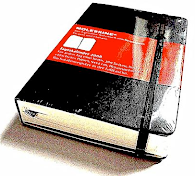
To celebrate this extraordinary font, Moleskine collaborated with the Helvetica foundation and acclaimed Japanese designers GROOVISIONS to create two special editions of the legendary notebooks (black and red). A limited edition of 500 of each notebooks will be available in very selected retailers in Asia and online at www.moleskineasia.com, to the pleasure of all fans of this legendary font. In Macau you can order it with us, just by throwing an email to Bloom.
HELVETICA • THE FONT
In 1957, Eduard Hoffman and Max Miedinger designed the sans-serif typeface "Helvetica" for movable metal type at Haas Type foundry, Switzerland.
This was first called "Neue Haas Grotesk", and then renamed "Helvetica", which is derived from "Confoederatio Helvetica" meaning Switzerland in Latin, in 1960. Since then, this typeface was diffused rapidly, being used for the Corporate Identities of public facilities and companies, etc., jacket designs of music albums, street displays, and posters.
Then, its derivatives increased, including the modified version "Helvetica Neue", in 1983. Helvetica has been cherished around the world as the most frequently-used typeface over the past half century, and is still outstandingly popular in the present age of digital typography. In Japan, this became a designated typeface for the first time at the Tokyo Olympic Games in 1964, and used as a standard typeface at national events, including the Osaka Expo'70, and now is the unmatched one adopted for the Cls of firms, including JR, products, and fashion. HELVETICA • THE MOVIE
Helvetica is an independent feature-length documentary film about typography and graphic design, centered around the typeface of the same name. Directed by Gary Hustwit, it was released in 2007 to coincide with the 50th anniversary of the typeface's introduction in 1957.
Its content consists of a history of the typeface interspersed with candid interviews with leading graphic and type designers, including Wim Crouwel, Michael Bierut, Erik Spiekermann, and Massimo Vignelli. The film aims to show Helvetica's beauty and ubiquity, and illuminate the personalities that are behind typefaces Limited Edition of the "Tribute to Typography - Helvetica, Past, Present and Future of the Typography" exhibition
192 pages • 9x14cm • acid-free paper
Special Edition with Moleskine Hard Black Ruled Notebook.
Design by GROOVISIONS, with logos debossed on both covers, customised banderole and history of Helvetica printed on the backend page.
Limited Edition with 500pcs in Asia.
MOP$198.00 •
 I asked this old lady if I could take a photo of her and her shop located near my university. And of course, she kindly said "Yes." I have been buying magazines and newspapers from this shop for 12 years, but today was the first time that I noticed its name.
It's dark. It's dark and wet in here. Everything seems chaotic. Hectic. Frantic. I can hear voices out there. Noises and anxious souls waiting out there. Thunders. No, don't drag me out. I want to stay here. Like I've always had. A turbulent move just pushed me to the ground. And now I feel the heat on my soaked body. I can barely open my eyes but I sense the rays of light around me. It's a bright and sunny day. And all I've got now is hope. Yes, hope.
Cesca
We cannot. So we're investing all our stakes straight on the future. That's where we're looking at.
- What's your business? - Someone would ask.
- Our business is the future!
That's the only way to be.
Cidade
Sem muros nem ameias
Gente igual por dentro
Gente igual por fora
Onde a folha da palma
afaga a cantaria
Cidade do homem
Não do lobo, mas irmão
Capital da alegria
Braço que dormes
nos braços do rio
Toma o fruto da terra
É teu a ti o deves
lança o teu desafio
Homem que olhas nos olhos
que não negas
o sorriso, a palavra forte e justa
Homem para quem
o nada disto custa
Será que existe
lá para os lados do oriente
Este rio, este rumo, esta gaivota
Que outro fumo deverei seguir
na minha rota?
por JOSÉ AFONSO
porquê mais água
se essa me sobeja
e a sede já passou
ESTIMA DE OLIVEIRA, 1996


 Posts