 Peter Suart was born in Jamaica, raised in Hong Kong and educated in U.K. From 1985 to 1999 he lived in Hong Kong, where he worked mainly in the performing arts field, and also for some years was a part-time lecturer on Music for Dance at the Hong Kong Academy for Performing Arts.
Suart has produced graphic works for magazines, books, and also for numerous theatre and dance performances. He has also exhibited pictures and designed theatre sets. Some of his pictures are now in private collections in the U.K. A man of many parts, Suart has also composed poems and lyrics, written (and himself performed) four one-man plays, and acted and narrated with theatre and dance companies. Currently, he is working on two writing projects - a novella and an illustrated parable. Suart has released six solo albums of music and two others with fellow musician Kung Shi Sing as 'the box' - a theatrical music ensemble. Solo and with 'the box' he has performed in numerous concerts, dance and music theatre works in Hong Kong and Taiwan. Concerts are planned for Cuba later in 2001. On the sports front, Peter represents a major - and as yet unsuspected - challenge to the world's leading table tennis stars. As a result of his Hong Kong experience, Suart speaks Cantonese as fluently as his native English. Suart lives in England.
- WILL BE WITH YOU IN BLOOM, TOMORROW AT 18H30.
Peter Suart's Countdown (1 day and a half to go)
1 comments Semeado por / Sowed by: antónio at 04:06

1. Who is Peter Suart, does he live in this World?
His identity remains unclear, but it may well be co-terminous with The World.
2. How and why have you met Hong Kong for the first time?
Came on a plane at the age of two. Daddy followed and got a job.
3. Are Tik and Tok some characters from your dreams, you find them on your life or is just a plan to make the World better? Who are they?
They are aspects of self, brought into being and grossly manipulated. Much like us.
4. Are you Tik? Or Tok?
Yes.
5. Can you tell us about "The Black Book of Falling"? Why is black, why the constant falling?
There is no ground to stand on in human life.
6. Do you think that by falling we're getting up? Is there a bottom, an end, on the "falling"? Is it the turbulence?
There is an end. It will be nasty. We can learn not to fear it.
7. What do you praise and love the most in Life?
The play of a dark imagination.
8. Where are you going to? Are you in a circle or in a straight line?
Nowhere. The answer is usually 'a helix'.
9. If you could do (everything) what would you do?
Build a tower of stone and wood, somewhere in the far North, in which to read, make books and drum.
10. Any plans to have your books translated in other languages?
Plans exist. They await rain.
11. Thoughts about Macau? Is it Macau anyhow ressembling the gamble, the chance, of Life or is just about easy going money? Do you think is there any philosophy on this? The mysticism of the Gambler? Is there anything else in Life than that?
We're better off without gambling, although I wouldn't bet on that.
12. What would you say for BLOOM-MACAU-HYBRID CULTURE-READERS, do you have a message for us/them?
Could you recommend a good, affordable Portuguese red?
13. Do you have a dog?
Only a toy. Much cheaper.
Acabados de chegar / Just arrived
0 comments Semeado por / Sowed by: Bloom * Creative Network at 03:12


The arch
over the gate marked 16
is nightly shelter
for twelve working girls
each of them sleeping now,
replaced by bicycles,
daylight, and drying fish.
So
ordinary is this street:
the scattered rain of red paper
collecting in the gutters,
the barbers gambling smoke
under ancient umbrellas
along the receding water's edge;
the rice bowls and razors
of the 16th arch on the harbour.
Yet
ther rises over the smoke of exile
a crash of voices in tones
suddenly too familiar for comfort.
This will surely send us scurrying
for dark tugboats waiting
beneath watermarked barges,
for the endles farewell of the ocean.
Till
the last hanging fish
fades from view
and is replaced
with an alternate order
to the daily chaos,
which could be pianos,
tapestries, or pasta.
 Tik and Tok are 2 bizarrely illustrated characters trying to understand the even more bizarre world that they inhabit. On page one of their latest adventure these 2 characters come out of a black hole and are released out into a bewildering world.
In this black and white world they go from each predicament to the next, encountering the very perennial problems of mankind.
This world comes straight from the realms of Peter Suart’s creative imagination.

 Muitos dos maiores artistas desde Dürer e Rembrandt usaram o meio impresso para explorar algumas das suas mais importantes ideias. Paula Rego enquadra-se nesta tradição, dando rédeas soltas à sua imaginação tanto na gravura como na litografia, usando esse meio com exuberância para criar obras que são tão perturbadoras, eróticas e poderosas como as suas pinturas.Este livro, sumptuosamente produzido, com reproduções em tritone e a cor, é a primeira monografia a tratar exclusivamente o trabalho gráfico de Paula Rego. Discute e analisa todas as suas gravuras, incluíndo trabalhos inéditos – mais de 200 gravuras e litografias que se espraiam ao longo de meio século, entre 1954 e 2003. Muitas das suas gravuras baseiam-se em temas, uma vez que ela própria afirma que uma imagem despoleta a ideia para a seguinte. Entre estas contam-se as Nursery Rhymes que revelam uma perspectiva de humor obscuro das dificuldades da infância, e proporcionam um espaço único para as precoces meninas e para os animais antropomofizados. Os extratos narrativos e matizes emocionais do seu trabalho estão vividamente patentes na série Peter Pan, de 1992, e também em Pendle Witches, de 1996, na qual colaborou de perto com o poeta e escritor Blake Morrison que, por seu turno, foi influenciado pela série de Paula Rego The Children’s Cruzade. O livro termina com o mais recente portfólio de litografias, baseado livremente em Jane Eyre.
Uma das mais importantes obras contemporâneas, concentrada num álbum para ter, para mostrar, para consultar e para admirar. Disponível na Bloom.
"Paula Rego Obra Gráfica Completa" de T. G. Rosenthal • Editora Cavalo de Ferro • ISBN: 9728791100
 Algo mais se passa na Bloom para além da simples venda de livros, temos muito mais para oferecer. Queremos contagiar a todos o nosso amor pelos livros e por tudo o que os rodeia! Planeamos sessões de leitura, encontros literários, tertúlias, lançamento de livros e tudo faremos para trazer os autores até nós e as suas obras.
Para iniciar toda uma série de eventos no nosso espaço, a Bloom, em conjunto com a editora MCCM Creations, convidou o ilustrador Peter Suart para o lançamento do seu último livro: “The Black Book of Falling”, o primeiro em tiras de banda desenhada. As personagens, Tik & Tok, são também protagonistas da ficção ilustrada “Tik & Tok Series” (“The Storm”, “The Love of Learning”, “North” – o mais recente – entre outros, todos editados pela editora MCCM Creations). O que à partida parece ser um livro para crianças, revela-se de imediato como um livro humorístico, temperado com algum misticismo, com mensagens subjacentes e que agrada tanto a miúdos como a adultos, é um livro para todas as idades. Segundo o autor, os seus livros podem mesmo encorajar os leitores a sentirem uma maior determinação.
No passado Domingo, a Bloom foi espreitar a inauguração da exposição das ilustrações originais do “The Black Book of Falling”, em Hong Kong. São trabalhos minuciosos, envolvidos em perfeccionismo e talento, que, garantidamente, não desapontará quem por lá passar.
Para quem pouco conhece Peter Suart, é natural da Jamaica, cresceu em Hong Kong e completou os seus estudos em Inglaterra, onde actualmente vive. Suart ilustrou diversos livros para a Folio Society in London e liderou diversos encontros sobre ilustração.
Mas há qualquer coisa de extraordinário sobre o Peter Suart. Ele é multi-facetado. Desde actor, ilustrador ou compositor a poeta ou escritor de peças de teatro, para evidenciar apenas algum do seu vasto potencial! E, para surpresa de todos, fala fluentemente Cantonense, por isso, é só escolher em que idioma decorrem as entrevistas ou as conversas: Cantonense ou Inglês!
E para não revelarmos tudo desde já, porque é necessário vir conhecê-lo pessoalmente, Peter Suart apresenta três das suas faces, a de ilustrador, escritor e, a mais recente, a de “cartoonista”, bem como alguns dos seus trabalhos. Junte-se à Bloom neste momento especial de estreia em dose dupla!
"Encontro com o Autor” com Peter Suart
Sexta-Feira, 23 de Março, 18:30, na BLOOM
 "The Storm"-This is the second book in the Tik and Tok series .
Tik lives alone in a hut by the beach, drawing pictures in the sand and listening to the wind. He fishes, grows melons, and all is peaceful. Until one day a little white dog swims in from the sea, setting off a chain of unusual events.The prequel to Peter Suart's first picture book 'WHERE IS THE WORLD?'. 'THE STORM' is a book about the discovery of Music and the first meeting of Tik and Tok.
For children aged 8 and above.For adults who love illustrated literature. Available @ BLOOM.
Peter Suart's Countdown (4 days to go)
0 comments Semeado por / Sowed by: Bloom * Creative Network at 19:45
 SUART was raised in Hong Kong and worked there from 1985 to 1999 as composer-musician, playwright-performer-set designer, graphic artist, lyricist-poet-writer. He now lives in England.
In 1987 he and Kung Chi Shing formed the box, a theatrical music ensemble, and the duo presented concerts and music theatre works alone and in collaboration with visual artists, choreographers, theatre folk and musicians in Hong Kong and Taiwan. Their last concert was 'Captain Kink's Cabinet' in 1999. They self-released a tape in 1990 and a CD, BOX GO HOME, in 1993.
Suart has performed solo widely and has self-released a tape and five CDs: The Bell ('94), In the Slaughterhouse Garden ('94), Rock'n'Roll Blood ('95), Old Man Bone ('96), Funny Love ('97), Lex Talionis Sub Specie Aeternitatis ('99). He has also worked with many Hong Kong musicians including Dancing Stone, Chan Wai Fat, Julia Mok, Blackbird, Paul Meredith and John Lee.
He has written, directed and performed four one-man theatre pieces at the Hong Kong Arts Centre: The Siege Perilous ('95, The Holy Grail), Grace and the Four Horsemen of the Apocalypse ('96, The Holocaust), Loop ('97, Quantum Mechanics), Identity Parade ('98, Race Relations in Hong Kong).
He has worked in various capacities with Sunny Pang (CCDC and Dance Forum Taipei), Tang Shu Wing (Theatre Resolu and No Man's Land), Chan Ping Chiu (Archaeology Bird), Josh Hon (Artist) and many others.
He has produced graphic art for numerous theatre and dance performances, magazines and books, has exhibited pictures and designed theatre sets. He has written and illustrated 'Where is The World?', published in Hong Kong in 2001 by Mary Chan has written a novella and is making illustrated fiction following his collaboration with MCCM Creations, where he perfomed-compose-wrote the famous Tik and Tok collection, and in between a long poem drawing on the American Civil War.
He has given lectures at ParaSite (on Ken Wilber) and the HK Arts Festival (on Tom Waits) and has guested as an illustration tutor.
He represents a major, and as yet unsuspected, challenge to the world's leading table tennis stars.
TAKEN FROM KUNG MUSIC NET and tuned by BLOOM.
 «A new edition of The Book of Imaginary Beings by Jorge Luis Borges has just been published by Viking (ISBN 0-670-89180-0). The translation is by Andrew Hurley, but the new translation is not the only difference. This book has almost as bizarre a history as some of those in Borges's own fictions. (Then again, the history of the various collections of Borges's short fictions was quite convoluted as well. Perhaps it is just another self-referential aspect of Borgesian fiction.)
Let me start by noting that this work is a compendium of beings "created" by other people or traditions - Borges (and Guerrero -see below) merely collected the ones they considered the most interesting. So unlike Borges's fictions (such as "Tlön, Uqbar, Orbis Tertius"), one cannot analyze it as being strictly the creation of Borges's mind. One can, I suppose, ask why certain beasts are included, but given a co-compiler, even that is not as useful.
There was a 1957 book, Manual de Zoologia Fantastica, with the authorship given as Jorge Luis Borges and Margarita Guerrero, containing eighty-two entries. A 1967 version, titled El Libro de los Seres Imaginarios, had some revisions and a hundred and sixteen entries, with the order re-arranged as well. The text for this is the text of all subsequent Spanish-language editions.
In 1969, a version in English (translated by Norman Thomas di Giovanni) was published by E. P. Dutton, followed by one by Jonathan Cape in the United Kingdom, and then an Avon edition, with Guerrero still listed, though in a lesser credit and misspelled as "Margaritta Guerro". (This was correctly spelled in my 1974 Penguin edition [ISBN 0-1400-3709-8].) The English-language version had four new entries: "The Carbuncle", "An Experimental Account of What Was Known, Seen, and Met by Mrs. Jane Lead in London in 1694", "Fauna of Chile", and "Laudatores Temporis Acti". There are also many changes other than mere translation from the previous Spanish edition. (I will mention some of these below).
A new Spanish-language edition was published in 1978. The order was changed for copyright reasons, but the four new pieces were not included. A 1981 Spanish-language edition came out in strict alphabetical order, again with the four pieces missing, and these have been omitted from all subsequent Spanish-language editions as well. Hurley has chosen to keep the revisions from earlier English-language editions only when these have shown up in subsequent Spanish-language editions.
Borges biographers Emir Rodriguez Monegal and James Woodall both claim that Borges worked with di Giovanni on the translation and contributed the new pieces as well. Monegal even says, "Its final version appeared in the 1969 English translation done by the author in collaboration with Norman Thomas di Giovanni." (Note that Rodriguez Monegal explicitly, and Woodall implicitly, consider Borges as the sole author, ignoring any contribution by Guerrero.) Hurley seems to feel there is no substance to these claims because the changes were not included in future Spanish editions. However, one needs to consider that Hurley is doing a translation, and could hardly claim to be translating passages that have not appeared in Spanish, but only in English and credited to other translators. The inclusion of these passages is therefore almost impossible in a new translation, so Hurley may have been swayed by practical considerations.»
Jorge Luis Borges's BOOK OF IMAGINARY BEINGS by Evelyn C. Leeper
YOU CAN READ THE ALL TEXT HERE AND FIND THE BOOK AT BLOOM.
Our very first special "Meet the Author" at BLOOM!
0 comments Semeado por / Sowed by: teresa at 15:31 BLOOM is not only about selling books. It’s also about events, gatherings, reading sessions, interaction and exchange of experiences!
To begin this series of events at our space, Bloom and MCCM Creations invited Peter Suart to present his latest book “The Black Book of Falling”, his first in a comic strip format. The main characters are Tik and Tok, previously featured in Tik and Tok Illustrated fiction ("The Storm",“The Love of Learning”, “North”- the latest - amongst others) and what seems at first to be a book for children ends up to be a humoristic book spiced with mysticism and as enjoyable for kids as for grown-ups. Suart even points out that his books may encourage readers to have determination!
Bloom went to Hong Kong yesterday for the opening of Peter Suart's exhibition of the original illustrations of "The Black Book of Falling". These incredible, so talented and genius drawings are certainly worth it!
For those of you who don’t know Peter Suart that well, he was born in Jamaica, grew up in Hong Kong and completed his studies in U.K., where he currently lives. Suart has illustrated several books for The Folio Society in London and has given many talks on illustration. There is something incredible about Peter. Believe it or not, he is a man of many parts! Illustrator, writer, music composer, performer, playwrights, just to name a few! Peter has exhibited his works worldwide. And to the surprise of all, he speaks fluent Cantonese, so he may conduct interviews or talks either in English or Cantonese!
But we shall disclose no further at this time. Come and join BLOOM in this soooo special double launching moment and have the chance to meet Peter and three of his many faces – the Writer, the Illustrator and the most recent one: the Cartoonist!
"Meet the Author" with Peter Suart
Friday • March 23rd • 18:30 @ BLOOM
“BLOOM” E “BOOKACHINO” ALARGAM OFERTA EM MACAU
Novas livrarias procuram cativar comunidades lusófona e anglófona
“Bloom” e “Bookachino”, as duas livrarias que recentemente abriram portas em Macau, pretendem aproximar as diferentes comunidades do território e satisfazer a crescente procura de livros. Para já, o público tem respondido bem à dupla aposta.
“Esperamos que os livros possam ser uma ponte entre culturas, como a própria imagem de Macau”, explicou ao JTM Rose Lynch, funcionária da livraria “Bloom”, inaugurada a 18 de Fevereiro.
Tentando juntar as comunidades chinesa, lusófona e anglófona, a “Bloom” vende livros em português, traduções inglesas de autores portugueses, obras chinesas traduzidas para inglês e, futuramente, também para a língua de Camões. Situada no Largo do Pagode do Bazar, na zona central da cidade, a livraria dedica especial relevo às obras de Literatura, Filosofia, Arte, Design, Arquitectura ou Ambiente, seja na China ou no universo lusófono, por forma a apoiar a “relação entre as diferentes culturas de Macau e a China”, afirmou Rose Lynch. Por isso, a loja dá prioridade a diferentes vertentes culturais, procurando “criar algo alternativo ao aspecto comercial de Macau e assinalar a necessidade de conservar a sua herança cultural”.
“Macau está a desviar-se para um caminho mais comercial totalmente centrado no negócio”, lamentou a funcionária de 22 anos, que se define como uma “cidadã irlandesa de Macau”. Rose Lynch nasceu em Macau, mas cresceu “um pouco por todo o lado, como uma criança global”, antes de regressar ao território há nove anos. Hoje, divide-se entre a livraria e o Jardim de Infância D. José da Costa Nunes, onde ensina inglês.
Menos de um mês depois da inauguração da “Bloom”, Rose Lynch considera que têm tido um bom número de visitantes, “principalmente amigos e transeuntes” que não deixam de ser atraídos pela fachada vermelha que contrasta com os edifícios vizinhos.
PARCERIA COM A “+853”. Independentemente do seu carácter pessoal e comercial, o projecto da “Bloom” está estreitamente ligado à Associação Cultural +853, criada no ano passado.
Para além de partilharem instalações, livraria e associação perseguem o mesmo objectivo fundamental - “elevar a cidade como uma marca de criatividade na região”, sublinhou António Falcão, membro da +853.
“Tanto a ‘Bloom’ como a +853 pretendem ser o eixo de actividades e eventos que estimulem a iniciativa, desafiando as pessoas a uma atitude mais criativa relativa a esta cidade e lançando a raíz para que possam depois por si estabelecer as suas próprias ideias”, esclareceu, para salientar o empenho da parceria na formação de “uma rede de interactividade” que ficará ao serviço da população de Macau.
Organizar, apoiar e participar em aulas, eventos, espectáculos, exposições, competições, concursos, colóquios, conferências, seminários, workshops e outras iniciativas são alguns fins inscritos nos estatutos de uma associação cujo plano de actividades deverá ser apresentado a breve prazo.
Já no que respeita à livraria, este mês deverá ficar assinalado com o lançamento dos livros “Diário da Guiné”, de António Graça de Abreu, “The Black Book of Falling - Comic Drawings”, de Peter Suart” e dos novos “City Notebooks” da Moleskine.
“A ideia base da ‘Bloom’ como livraria é prestar um serviço à população de Macau, essencialmente aos leitores de inglês e português, facultando-lhes o acesso ao vasto mundo dos livros, tornando-o mais largo. A ‘Bloom’ faz apenas a ligação entre as duas partes, apresentando-as e unindo-as”, afirmou António Falcão.
Salientando que a livraria pretende “dar grande importância” às obras de autores de língua portuguesa traduzidas para inglês, o mesmo responsável sustentou ainda que, pelo menos teoricamente, a “Bloom” poderá prestar um serviço de encomendas de todas as obras publicadas em Portugal e de milhares de títulos da rede de editoras internacionais de língua inglesa. Brevemente, este serviço irá também funcionar via internet.
VARIEDADE EM INGLÊS. Também a dar os seus primeiros passos está a livraria “Bookachino” que, porém, concentra-se sobretudo na oferta de obras em inglês, servindo assim o seu principal público-alvo - os executivos das principais empresas de Macau, vindos da Austrália, Nova Zelândia, América ou Reino Unido.
Atendendo ao perfil dos seus principais clientes, a livraria procura disponibilizar uma grande variedade de livros especializados, nomeadamente em economia, para além de obras de autores locais nas línguas inglesa e chinesa.
Em funcionamento desde 6 de Janeiro, a livraria, propriedade de Jason Broome e Shonee Mirchandani, tenta suprimir a necessidade de livros de língua inglesa.
“O nosso negócio tem sido prova disso”, afirmou ao JTM o gerente da “Bookachino”, Phillip Veqa.
Apesar da ausência de publicações em português, não são raros os clientes luso-falantes que procuram a nova livraria. Segundo Phillip Veqa, os portugueses procuram, principalmente, “livros de culinária e grandes edições especializadas sobre arte”. Os livros em português não foram uma aposta porque “já existe uma livraria portuguesa e não valia a pena explorar esse mercado”, acrescenta Veqa.
A livraria, estabelecida no NAPE, planeia desenvolver uma zona destinada à leitura e uma pequena secção de comida e bebidas. “O café combina com os livros”, explica o gerente, originário das Filipinas mas a residir em Macau há cerca de dois anos.
Por outro lado, a “Livraria Portuguesa” parece não recear a concorrência. Segundo Cristina Lai Mei Ieng, gerente da livraria, o estabelecimento “sobrevive há 22 anos” e “tem “clientes habituais que não vão deixar de o frequentar”.
Mais de sete anos após a transferência de soberania de Macau, Cristina Leng acredita que a livraria continua a servir os portugueses, nomeadamente em obras especializadas relacionadas com o Direito, cuja procura tem vindo a aumentar.
A gerente sublinhou ainda que tem aumentado o volume de vendas de livros de aprendizagem da língua portuguesa para estudantes estrangeiros.
por Laura Bastos / JTM ● 07 MAR 2007
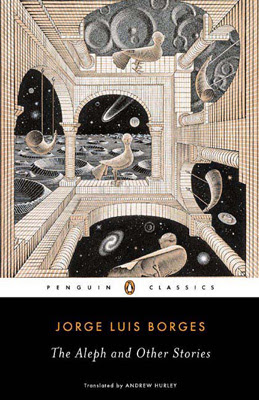 The Aleph
Jorge Luis Borges’s short story, The Aleph, is entirley about the concept of infinity. In this story The Aleph is a point in space that contains everything else and allows those who see it to witness everything. This is similiar to one the Library of Babel in which the librarians are searching for a manuscript that contains all knowledge. In this story however, Borges is mourning over the death of his former lover Beatriz Viterbo. He stops by her house and meets her cousin Carlos Argentino Daneri and realzies that Daneri is a terrible poet, but under the inane belief that he actually possesses more than a gram a real talent. It becomes clear that Daneri’s goal is to create a massive poem, detailing everything on Earth by using The Aleph. Borges witnesses the Aleph and sees the power that is inside of it, i.e. everything in an infinite sense. Later the building is torn down and Daneri wins an award for literature. Importantly however, I believe that Borges is trying to reinforce his themes on the infinite and the simple fact that as humans, we lack the capacity to understand or remember the infinite perfectly. As with language our knowledge is imperfect.
"The Aleph and Other Stories" by Jorge Luis Borges • Penguin Classic • ISBN 9780142437889
 Passámos pelo melhor fim-de-semana da Bloom até agora. Começamos a ser descobertos. Desviámos as pessoas do seu rumo normal e fizemos com que se deslocassem até ao Largo do Pagode do Bazar onde nos encontramos. Não é muito tempo desde o Centro da cidade, o Largo do Leal Senado. Umas ruas, uns cruzamentos, a Rua dos Mercadores, depois a Rua das Estalagens ou então, do outro lado, seguindo pela Avenida Almeida Ribeiro fora corta-se no empedrado da Rua 5 de Outubro, é fácil basta olhar para o chão, mais uns passos e vai-se desaguar mesmo ao lado do Templo Hong Kung que nos guarda a poucos metros de distância. São cinco minutos do Centro até aqui. Há mais caminhos. Há as travessas e os becos, um mundo perdido em Macau, que vive para além das orlas dos casinos e dos neons que se alastram pelas periferias da cidade.
No final estamos aqui, à espera, no conforto dos livros.


"I've never felt any particular encroachment of the 'celebrity' stuff into my life," shrugs Norton. "I've always tried to do movies that are very good for me each time, so I think people are able to interact more with the characters than with me. I think I can honestly say that I really haven't fundamentally the patterns of my life in any substantial way. I've always lived in New York City; I've never stopped riding the subway; I've never stopped doing anything. And people are never coming up to me with any kind of presumption of knowing me..."
 «Imagine what it’s like to have your eyes rubbed raw with broken glass. This is what reading Chuck Palahniuk is like. You feel the shards in your eyes, yes, and then you’re being punched, hard, your nose broken. Like the world is broken. Livid because there’s violence, but there’s sex, there’s the bodily fluids that accompany violence and sex. Eyes rubbed in broken glass, first, then in blood and lymph, and you want more. That’s just the plot. Don’t even get me started on the characters. You should stop listening right now. Ok, they’re nameless dual personality sadomasochistic anarchist neo-fascists turned rescuers. Or they’re the last surviving member of a suicide cult turned domestic servant turned steroid-pumped Hollywood messiah turned rescuers. Or they’re sexually addicted self-loathing hypochondriac medical school dropout con artists who pretend to choke in restaurants turned rescuers. Not counting the one about the mangled-formermodel-and-the-transsexual-who-is-really-her-brother-but-shedoesn’t-know-it, or the one about the mysterious crib deaths, or the one about the hidden rooms and human sacrifices. Don’t count those. Count on fragments. And fragmentation. But, somehow, you keep reading. And after you wipe the pulp from your eyes, you realize something. That the world is not broken. Somehow, the world feels more together than before you started. This is what it feels like to read Chuck Palahniuk. Broken, but something disturbing and beautiful recreated in its place. And when you’re done, you realize that everything really is all right. When you’re done, you find yourself thinking about the books. And, maybe, if you’re lucky, sounding like them.
This essay will focus on the ways in which beauty, hope, and romance remain Palahniuk’s central values throughout his seemingly ugly, existential, and nihilistic works, particularly in the novel and film Fight Club, Palahniuk’s most widely recognized work, and Survivor, which I believe to be Palahniuk’s strongest, most fully realized creation. That Palahniuk’s harshest critics and most deferential fans mutually fail to notice these concerns becomes, I hope to show, central to the novels’ aesthetic and moral imperatives.»
in "The Fiction of Self-destruction: Chuck Palahniuk, Closet Moralist" by Jesse Kavadlo
Stirrings Still • The International Journal of Existential Literature • Fall/Winter 2005 • Volume 2 • Number 2
 A 101 Noites foi à procura da paternidade que se escreve, aquela que saltou para os livros e assim se perpetuou. Descobriu que o Pai, em todas as suas formas, ocupa lugar de destaque na literatura do mundo e nos livros de todos os tempos. Assume diferentes contornos em momentos distintos e a paternidade é variada. Homero entende-a de uma forma, Marie Darrieussecq de outra, e isso não espanta.
A diversidade consegue ser unânime quando se chega ao principal: independentemente do papel de conselheiro, protector, repressor ou ausente, o Pai de quem escreve surge nas folhas dos livros como o gerador da vida humana e é nesta condição que tem merecido um lugar de destaque na criação literária.
A editora explica que “demonstrando o papel preponderante desta figura no nascimento, desenvolvimento e evolução humanas,” estão reunidos “assim neste volume os mais belos textos literários sobre o Pai que, sob os mais diversos estilos, escolas literárias ou intenções, nos dão a conhecer alguns dos inúmeros significados que a paternidade pode ter.”
Porque amanhã é 19 de Março, aqui fica “Pai, Uma Antologia Literária”. O Pai por Homero, Shakespeare, Goethe, La Fontaine, Balzac, George Sand, Eça de Queirós, António Nobre, Alexandre O´Neill, Robert Lowell, José Agostinho Baptista, Luiza Neto Jorge, Marie Darrieussecq e José Luís Peixoto.
A Bloom associa-se a esta marca do calendário e lembra que com as palavras também se protege, ama, homenageia.
“Pai, Uma Antologia Literária”, é uma edição da “colecção fragmentos”, para ler em voz alta ao longo do ano inteiro.


 Posts
Posts






![[zoom in]](http://bp3.blogger.com/_jduB4Xpp9eU/RyDDY8eSh-I/AAAAAAAAArg/L_Fre_nCXYs/s1600-h/BloomMapS.jpg)