We know, this is old, we don't come here for a while and our website redesign is taking longer that expected. Anyway, we're still alive and we want to wish you all the best for now and then!
Merry Xmas and Happy New Year!
Qual o tempo ideal para se dispensar com uma pessoa real?
Com o passar do tempo, deixamos de ter medo do escuro para começarmos a ter medo de coisas claras e evidentes como a verdade.
De certa maneira, é curiosa a ambivalência em querermos aquilo que perdemos.
A quantidade de episódios que teria de eliminar,para que pudesse antever um final feliz
para histórias que "lamentavelmente" tenho ouvido.
Afinal de contas, o que significam as horas para todas as pessoas que me perguntam as horas.
A invísivel necessidade que temos em questionar as horas.
Porque ao fim e ao cabo,
ao fim e ao cabo, tudo continuará a existir,
mesmo nessa diferença em permanecerem iguais.
Suddenly we're gone. We didn't announce it, didn't tell anyone, it just happened. But we're not gone for good. We're building a new spot. Ring Joid already found a new home here. We'll coming next. But this space will not die. Stay tuned!
 The Swine Flu outbrake is getting the world in flames. It as been a consequence of previous cataclysm scenarios which, apart from the real threat, are always a bit overrated when compared with other contagious diseases who are taking lives every minute and are not on the spotlight. This doesn't mean we shouldn't be aware and follow the indications of local healt institutions and take extra care.
But this post comes from the opportunity that we have on following it now in another way using Google Maps. Logging into the world almost in real time we can walk behind the news on the flu, just by clicking on the map above or through this link. But refrain by being too scared.
The US Centers for Disease Control and Prevention (CDC) reports that the symptoms and transmission of the swine flu from human to human is much like that of seasonal flu. Common symptoms include fever, lethargy, lack of appetite and coughing, while runny nose, sore throat, nausea, vomiting and diarrhea have also been reported. It is believed to be spread between humans through coughing or sneezing of infected people and touching something with the virus on it and then touching their own nose or mouth. Swine flu cannot be spread by pork products, since the virus is not transmitted through food. The swine flu in humans is most contagious during the first five days of the illness although some people, most commonly children, can remain contagious for up to ten days.
Experts agree that hand-washing can help prevent viral infections, a surprisingly effective way to prevent all sorts of diseases, including ordinary influenza and the new swine flu virus. Influenza can spread in coughs or sneezes, but an increasing body of evidence shows little particles of virus can linger on tabletops, telephones and other surfaces and be transferred via the fingers to the mouth, nose or eyes. Alcohol-based gel or foam hand sanitizers work well to destroy viruses and bacteria. Anyone with flu-like symptoms such as a sudden fever, cough or muscle aches should stay away from work or public transportation and should see a doctor to be tested.
[FROM WIKIPEDIA]
 Vessel One by Adam Farlie
Twenty designers including will exhibit sex toys and other objects on the theme of love in Milan next month, during the furniture fair.
Vessel One, designed by Adam Farlie, is the most original one. It's a bed that asks whether an object can become a substitute for a person. Vessel One was created to replace absent people through sound. This object is always listening, constantly recording the sounds made by those who have lain on it. Designed as a sensitive vessel that captures and contains the ‘audio-memories’ of past occupiers through sound. when Vessel One detects silence, it plays back sound memories at random. Sounds are recalled in the bed in the same way a Memory pops into the mind. One might lie in bed and hear past intimacies, infidelities or conversations from a number of days, weeks or even years ago. Vessel One is made of Corian.
Adam Farlie graduated in 2008 from the Design Academy Eindhoven. He specialises in emotional design. He lives and works in Eindhoven, The Netherlands.
[Photo ⓒ Adam Farlie]
• SEE THE OTHER CREATIONS AT THE LOVE DESIGN EXHIBITION
audience
noun
1 the audience applauded SPECTATORS, LISTENERS, viewers, onlookers, patrons; crowd, throng, congregation, turnout; house, gallery.
2 the radio station has a teenage audience MARKET, PUBLIC, following, fans; listenership, viewership.
3 an audience with the Pope MEETING, consultation, conference, hearing, reception, interview; informal meet-and-greet.
Readability is a great and simple tool that makes reading on the web much more enjoyable by removing the junk around when you are reading. it's very easy to use, just check it here.
[BY LAB.ARC90]
 Quem chega aqui por acaso ou quem ouve falar de nós e não nos conhece fica com aquela sensação de incerteza entre o desconhecido e o inesperado. Estamos cá e não estamos. Já estivemos. Por certo, vamos voltar a estar. Era o mesmo quando se chegava ao nosso espaço de quatro paredes. Vermelhas por fora, da mesma cor e de branco por dentro.
 A Bloom nasceu, acima de tudo, de uma omissão existente no território de Macau, esta terra onde a sua sede germinou. Uma vontade de beber para além da miragem do oásis. Num desejo ardente de ter uma escolha e não apenas uma alternativa. Por poder passar os dedos pelas coisas e não por escolher o menos mau, só porque não há mais. Ou não ter que apanhar o barco e partir. Macau era assim. Deixou de ser tanto assim quando aparecemos. Quando começámos a disputar e a preencher o ânimo dos outros, a oferecer-lhes um mundo um pouco diferente.
Nascemos da união entre a paixão e o apetite, os livros, as histórias, o eco das vozes de quem as escreve, e foi por aí que prosseguimos o nosso caminho. Demos tudo o que tínhamos, investimos toda a nossa riqueza, a nossa vontade de dar, de abrir uma ponte ao indício que criámos no ar que quisemos tornar mais limpo. E crescemos, fizemos coisas novas, com as nossas mãos. Castelos numa terra fresca cheia de céu. Uma praça com um templo onde os barcos dantes chegavam. E a pouco e pouco começámos a andar, com os pés que tínhamos, com uma vontade enorme de abrir o cerco. De abraçar o mundo todo, de uma só vez. Por aí aprendemos e fomos errando, tropeçando em rota de colisão com o prólogo da nossa história. Que chegava com a carrinha azul cheia de presentes lá dentro.
A Bloom abriu no segundo mês do ano e foi um dia feliz, simples, sem alarido. Um percurso longo até ali chegar, que começou pelo lado mais baixo do chão numa folha em branco e se prolongou, continuando. E com o tanto que fizemos, falhámos de outro modo. Deixámos sem querer as pessoas à espera, os livros desordenados, por vezes sem rótulo. Nem sempre com as novidades mais prementes. Em certas ocasiões os dedos e a disponibilidade exclusiva não chegaram. Nunca tivemos encostos, éramos apenas dois pares de mãos.
Agora o presente foi interrompido de repente, não foi a carrinha azul que o trouxe. Seguirá pelo golpe de um outro momento. Para um lado ou para o outro. Mas sempre com o mesmo desejo, o de pôr o mundo a girar. O que nos trouxe até aqui e este, que nos levará de volta.
Decades ago, a cousin of mine one evening left his car in a multi-storey car park near a Manchester theatre where the English National Opera Company was soon to start a performance. When my cousin went to get his car to drive home he found a chorus of opera goers doing the same. Quite a few of them had started earlier than him. The car park's one exit, scores of cars, and the helical exit ramp inadequately serving six or more floors meant that getting to the fee kiosk took around half an hour. When David's turn to pay came he saw that the fee was for over four hours' parking and he knew that his car had only stood three and three quarter hours on the space he was asked to pay for having occupied longer. (More than once, he's described the evening in detail and that point never changes.) David told the car park attendant that he thought the fee asked was mistaken and he said why he did. The attendant adhered to that tradition of British service that, in the seventies and eighties, gave National Car Parks' its unparalleled reputation. David sat in his Volvo - one of those big ones, often built as estate cars - and said something like, "If I'm going to be late because of poor egress [can't be his word but his point] arrangements have delayed my starting the 30-mile drive home then I'm going to pay for the parking I had, no more." Drivers behind the Volvo began to ask what had ended their slow progress. They did so in growing numbers - some with threats, others with offers to 'pay the difference.' David rehearsed his intention, ignored the threats, and declined the offers. The delayed drivers' frustrations grew. Sitting in his kiosk the attendant came to appreciate that it was less strong than the Volvo; he 'phoned for advice and began to negotiate. (Not all traditions are inviolable.) David said if he were given the home telephone number of the area manager for the car park company then he would pay for 'up to four hours' and leave. 'Knowing my cousin, he may have remarked that he'd had time to form a clear memory of the attendant's face. For sure, he got a 'phone number and, to less than happy acclaim, drove off. Home again, about one in the morning, he rang the 'phone number and heard a man whose voice suggested the call had awoken him. David established the man worked managing car parks. He went on to mention that on this night, which they were enjoying, an opera had been performed at the theatre near the car park he had used and he explained that, with many similar users having to pay before they could each drive their car away, to get from the parking spaces to the fee kiosk took long enough to increase parking charges asked. Increases that were, David said, clearly objectionable. The man seemed to think being awoken in the early hours was the same. Certainly, he asked did David know what time it was. David said he did, even mentioned the time, and added that if he had not been so delayed leaving the car park he would not have been 'phoning as he was. The upshot of these delays and alarms was that on opera nights an extra attendant was employed to pencil on each driver's car park tickets the time he, or she, drove from the floor where they had parked the vehicle they drove.
From a 2007 visit to my native country, which I left 27 years ago, and from having there, for 12 days, hired a car, I guess that if anybody, for more than one minute, nowadays halted a queue of cars leaving a city car park he, or she, would risk being thought a terror suspect and becoming subject to detention without charge for interrogation lasting up to 28 days - or is it now 42? (Unlike the Pope, on matters of faith, or car parking agents, on new ways to get more money, I could be wrong*.)
* "I beseech you, in the bowels of Christ, think it possible you may be mistaken", is a plea Oliver Cromwell made, on 3rd August 1650, in a letter to the General Assembly of the Kirk of Scotland. Remembering it when I'm perplexed has often been of use to me; saying it to anybody supremely confident and yet incompetent has helped me, too.
 You are still on time. Of the 500 limited copy edition there are a few available just for you.
Created in 1957, the Swiss-born Helvetica font has now become the most iconic typeface and more than a year after its 50th birthday, it continues to fascinate the world. The "Tribute to Typography - Helvetica, Past, Present and Future of the Typography" exhibition was organised at the Laforet Museum in Harajuku.
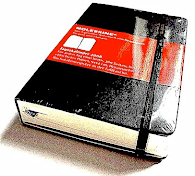
To celebrate this extraordinary font, Moleskine collaborated with the Helvetica foundation and acclaimed Japanese designers GROOVISIONS to create two special editions of the legendary notebooks (black and red). A limited edition of 500 of each notebooks will be available in very selected retailers in Asia and online at www.moleskineasia.com, to the pleasure of all fans of this legendary font. In Macau you can order it with us, just by throwing an email to Bloom.
HELVETICA • THE FONT
In 1957, Eduard Hoffman and Max Miedinger designed the sans-serif typeface "Helvetica" for movable metal type at Haas Type foundry, Switzerland.
This was first called "Neue Haas Grotesk", and then renamed "Helvetica", which is derived from "Confoederatio Helvetica" meaning Switzerland in Latin, in 1960. Since then, this typeface was diffused rapidly, being used for the Corporate Identities of public facilities and companies, etc., jacket designs of music albums, street displays, and posters.
Then, its derivatives increased, including the modified version "Helvetica Neue", in 1983. Helvetica has been cherished around the world as the most frequently-used typeface over the past half century, and is still outstandingly popular in the present age of digital typography. In Japan, this became a designated typeface for the first time at the Tokyo Olympic Games in 1964, and used as a standard typeface at national events, including the Osaka Expo'70, and now is the unmatched one adopted for the Cls of firms, including JR, products, and fashion. HELVETICA • THE MOVIE
Helvetica is an independent feature-length documentary film about typography and graphic design, centered around the typeface of the same name. Directed by Gary Hustwit, it was released in 2007 to coincide with the 50th anniversary of the typeface's introduction in 1957.
Its content consists of a history of the typeface interspersed with candid interviews with leading graphic and type designers, including Wim Crouwel, Michael Bierut, Erik Spiekermann, and Massimo Vignelli. The film aims to show Helvetica's beauty and ubiquity, and illuminate the personalities that are behind typefaces Limited Edition of the "Tribute to Typography - Helvetica, Past, Present and Future of the Typography" exhibition
192 pages • 9x14cm • acid-free paper
Special Edition with Moleskine Hard Black Ruled Notebook.
Design by GROOVISIONS, with logos debossed on both covers, customised banderole and history of Helvetica printed on the backend page.
Limited Edition with 500pcs in Asia.
MOP$198.00 •
Bloom welcomes Michelin guides in Macau
2 comments Semeado por / Sowed by: Bloom * Creative Network at 11:30 The Michelin Guide is extending its reach into China with a new edition ranking dining destinations in Hong Kong and Macau for the first time.
The French bible of gastronomy featuring 251 restaurants and hotels in the two Chinese cities is Michelin's second guide outside Europe and the U.S. The debut Tokyo edition was published in November 2007, with eight restaurants receiving Michelin's highest three-star rating. Being a best-seller right in the first week.
Michelin awarded 40 stars to 28 restaurants in Hong Kong and Macau, and two venues got the top ranking. Lung King Heen in Hong Kong's Four Seasons Hotel received three stars, while the hotel's French eatery Caprice won two stars. Inspectors also decided Robuchon A Galera at Macau's Lisboa Hotel, owned by casino mogul Stanley Ho, was worthy of Michelin's highest award.
The team of 12 undercover inspectors, including two Chinese, have been in Hong Kong and Macau testing about 1,200 establishments since late 2007, said Michelin Guides Director Jean-Luc Naret. Michelin plans to expand the guide into other parts of China, Mr. Naret told a news conference in Hong Kong.
The guide, which will go on sale tomorrow, Friday the 5th of December, is published in both Chinese and English. Bloom will have it available at Bloom Yellow in St. Lazarus' Albergue and more close to you at Ou Mun Café, just on the heart of town, on the corner of Senado Square.
• NEWS ABOUT MICHELIN GUIDE HONG KONG AND MACAU
• OU MUN CAFÉ AT LONELY PLANET
It's obvious that something is going to change and life will be for the better. When you have a smarter person driving, the wheel turns with greater directions and the tiny road ahead becomes a horizon full of opportunities, with endless fields to grow. Here or there the clock and the heart are beating in the same way. We're on the same machine, an engine to make a better world!
[BLOOGGING WITHIN THE AIR OF THE CITY - USING: BLOGWRITER LITE and iPHONE]
 Obama is close to a big win in USA. According to CNN's latest projections, Obama has 207 electoral votes and McCain has 135. There were projections that Obama will win Ohio, a key battleground state with 20 electoral votes. No Republican has won the White House without winning Ohio. Going into the election, polls showed Obama with a 3-point lead there. All the country is on the move and close to a state jubilation. It's all for the coutry but is also all for the world. What the admisnistration Bush did along these years will be hard to account. The damage is beyond repair and the action will start from scratch. Nothing better to start and do it neat. It's not just the President, from the Senate to the states the republicans will have a huge loss. We know that most of the time ideas drown on politics, but we're hopeful of a change. It's a revolution!
Bloom is happy for the world!

Macau Society for the Protection of Animals (ANIMA) invites you to November's Adoption Day. It will happen this coming Saturday at their shelter in Coloane. Bloomland wants to join this effort in the name of animals. Best friends of man.
Do show up to support dogs and cats of Macau! Thank you!
CHECK THE INFO HERE or CLICK ON THE IMAGE.
Poderemos compreender tudo isto, mas se não apoiarmos com humanidade, fugirá por entre os nossos dedos.• LIGAÇÕES EXTERIORES: WIKIPEDIA em Português e em Inglês.
Poderemos compreender e apoiar com humanidade, mas se não governarmos com verdade, não esperemos a gratidão do povo.
Poderemos compreender, apoiar com humanidade, governar com verdade, mas se não pusermos tudo em prática com todo o nosso empenho, de nada valerá o esforço.
CONFÚCIO [551 BC - 479 BC]
The first thing you need to do before you go is catching the flight. If you've got your ticket and your passport that's much better, you don't need to worry about anything else. If you're in, even if it seems like a small cage, it means that you're on the way to getting there. To your destination.
I lost the boat for fifteen minutes, the one that goes directly to the airplanes. Then, after ridding to a different route, the train closed its doors just in front of my eyes. The clock didn't stop. It kept going on the same pace.
The first check-in was closed and at the second they were packing everything down, after I ran desperately for a kilometer lost on the airport counters. I begged. And they walkie-talked the one in charge on the end of the line. Seconds too long and finally they let me in. I was there and it didn't matter if I had to remove some books from my overweighted luggage. At that time I've reached the point of no return.
That's how the following fifteen days began.
 A BOOK THAT COMES ON THE PERFECT TIME
Part cookbook—with more than 120 enticing recipes—part culinary history, part inquiry into the evolution of an industry, Milk is a one-of-a-kind book that will forever change the way we think about dairy products.
Anne Mendelson, author of Stand Facing the Stove, first explores the earliest Old World homes of yogurt and kindred fermented products made primarily from sheep’s and goats’ milk and soured as a natural consequence of climate. Out of this ancient heritage from lands that include Greece, Bosnia, Turkey, Israel, Persia, Afghanistan, and India, she mines a rich source of culinary traditions.
Mendelson then takes us on a journey through the lands that traditionally only consumed milk fresh from the cow—what she calls the Northwestern Cow Belt (northern Europe, Great Britain, North America). She shows us how milk reached such prominence in our diet in the nineteenth century that it led to the current practice of overbreeding cows and overprocessing dairy products. Her lucid explanation of the chemical intricacies of milk and the simple home experiments she encourages us to try are a revelation of how pure milk products should really taste.
The delightfully wide-ranging recipes that follow are grouped according to the main dairy ingredient: fresh milk and cream, yogurt, cultured milk and cream, butter and true buttermilk, fresh cheeses. We learn how to make luscious Clotted Cream, magical Lemon Curd, that beautiful quasi-cheese Mascarpone, as well as homemade yogurt, sour cream, true buttermilk, and homemade butter. She gives us comfort foods such as Milk Toast and Cream of Tomato Soup alongside Panir and Chhenna from India. Here, too, are old favorites like Herring with Sour Cream Sauce, Beef Stroganoff, a New Englandish Clam Chowder, and the elegant Russian Easter dessert, Paskha. And there are drinks for every season, from Turkish Ayran and Indian Lassis to Batidos (Latin American milkshakes) and an authentic hot chocolate.
This illuminating book will be an essential part of any food lover’s collection and is bound to win converts determined to restore the purity of flavor to our First Food.
ABOUT THE AUTHOR
Anne Mendelson grew up in southeastern Pennsylvania in an area where small dairy farms were once common. In addition to Stand Facing the Stove (a history of The Joy of Cooking and its authors), she collaborated with chef-writer Zarela Martínez on three cookbooks exploring Mexican cuisine. She has written for Gourmet, Saveur, and The New York Times. Mendelson lives in northern New Jersey.
Milk, The Surprising Story of Milk Through the Ages, by Anne Mendelson
KNOPF • COOKING • HISTORY • HARDCOVER • OCT 2008
[WHO STILL HAVE PROBLEMS TO LOGGING IN]
hubris |ˈ(h)yoōbris|
{noun, first used in the late 19th century} [from Greek],
• presumption, insolence, (orig. towards the gods); pride, excessive self-confidence
EXAMPLES
Aldous Huxley: "Hubris against the essentially divine order of Nature would be followed by its appropriate nemesis."
S. J. Gould: "By what hubris do we consider ourselves any bigger in a universe of such vastness?"
[Shorter Oxford English Dictionary (Fifth edition, 1993) page 1281, left hand column.]
The ancient Greeks believed hubris led to downfall
In 'hubris' the 'u' occurs before the ' b', and an 's' is the final letter. The same letters, capitalized and brought together in their hUBriStic order, name an internationally known bank. The overlap of the letters and their positions in the word and in the bank's name is a coincidence, perhaps an amusing one. If one find the coincidence striking then, moving from orthography to meaning, one may come to ask, "Could the bank's abundant enthusiasm for rehearsing its successes and for pursuing profit by means ranging from the conventional, through the disastrous, to the legally dubious, together amount to hubris?"
Moving again, from current meanings to past beliefs, one might see the losses, accusations, and punishment that UBS has recently suffered as echoes of those nemeses that long dead Greeks believed they risked when by ignoring their cities' conventions, faith, laws, and wisdom.
[BY GODFREY @ BLOOMLAND]
• EXTERNAL LINK AT WIKIPEDIA
 Como foi anunciado aqui e sem grande alarido da nossa parte, devido ao tufão e à crescente corrente de água e por tudo o que aconteceu posteriormente, a Bloom * Creative Network levou Carlos Marreiros à Faculdade de Arquitectura da Universade de Hong Kong dando início às palestras de Outono organizadas por esta instituição. A ideia era levar também o complemento dos livros, sobre a arquitectura de Macau e em específico sobre o multifacetado arquitecto macaense, ocasião que não se chegou a realizar. Acabámos por não estar em condições de acompanhar a pequena comitiva que se deslocou ao território vizinho porque no dia anterior o horizonte era bem diferente.
A palestra intitulada "Tracing Lines Between Two Worlds" acabou por ser um sucesso, com uma audiência repleta e uma grande projecção na imprensa local das duas RAE's. Para nós foi uma grande satisfação ter estabelecido este intercâmbio. É fulcral para o nosso projecto, na necessidade de discussão de todas as suas amplitudes, poder falar, mostrar e discutir tudo o que nos (des)encanta. Foi a primeira colaboração com esta instituição universitária, outras oportunidades surgirão para a contínua repercussão do nosso desígnio, e referimos aqui o "projecto" desta cidade como espaço multicultural e criativo. Para que não se esqueça é necessário incluir esta mescla de muita coisa e de coisa nenhuma que vive e ferve por entre as margens desta terra que há muito tempo tem o nome de Macau. Por alguma razão viemos aqui parar, por outra iremos algum dia partir. Até lá é preciso continuar e fazer a ligação entre estes mundos da realidade e da imaginação. Foi nesse âmbito, para além da clara alusão Oriente/Ocidente, que demos o título a esta sessão. Agradecemos aqui ao Arquitecto Carlos Marreiros pela pronta disponibilidade e a Ralph Lerner, o Decano da Faculdade de Arquitectura de Hong Kong, por ter dado a melhor continuação à nossa iniciativa.
Fica aqui a reportagem do Hoje Macau pela mão de José Manuel Simões.
Carlos Marreiros entusiasma plateia em conferência proferida em Hong KongOUTRAS LIGAÇÕES AO MESMO TEMA:
'A arquitectura serve para promover a felicidade'
Carlos Marreiros, um arquitecto com alma, esteve na Faculdade de Arquitectura de Hong Kong onde foi escutado por uma pequena multidão que se rendeu aos seus dotes de oratória, experiência e ousadia.
À conferência, inserida nas Palestras de Outono e realizada em parceria com a Bloom Creative Network de Macau (que alagou mas não morreu), compareceram cerca de 150 pessoas, na sua maioria estudantes de arquitectura, mas também professores e arquitectos, inclusivamente Ronald Lu, Presidente do Instituto de Arquitectura de Hong Kong.
O arquitecto de Macau falou sobre as relações entre arquitectura, sociedade e economia, debruçou-se sobre a arquitectura da miscigenação e da transgressão — sobretudo a da sua cidade — afirmou que “Macau transgride pois, desde as gaiolas de ferro até aos volumes e tamanhos, há muitas coisas que não deveriam sequer existir”.
No seu discurso, percorreu o património construído no Território, desde o chinês e o português até ao dos nossos dias, afirmando que “património é tudo o que faz parte da memória colectiva, independentemente da sua idade, inclusivamente o que está a ser feito agora”. Ou seja, do património mais antigo até ao modernismo, com destaque para a obra de arquitectos como o modernista Cham Kuan Pui ou Raul Furão Ramalho Costa, que percebeu como ninguém o clima e a atmosfera de Macau, Manuel Vicente Bravo, Bruno Soares ou Adalberto Tenreiro.
Viagem pelo tempo
Um discurso que foi uma espécie de viagem pelo tempo, onde Marreiros enquadrou alguns dos seus trabalhos, dos mais pequenos aos de maior envergadura como o do Estádio de Ténis em Coloane. Como não podia deixar de ser, falou ainda do exercício de fazer arquitectura, referindo que “um arquitecto não pode limitar-se a ser competente ou apenas um agente de construção. Tem que ser inovador, adiantar-se ao seu tempo, não se prender ao gosto instituído”. Tem que ser criativo, inovador, ousado. Afinal, “a arquitectura serve para promover a felicidade”.
Marreiros, que na palestra chegou a interpretar John Lennon em “Imagine”, acredita que a globalização é inevitável, acredita na fraternidade universal e no direito à diferença. Todavia, crê, “a globalização só tem valor quando sabemos que o lugar onde vivemos tem alma”. Ao basear a sua obra numa dialéctica de procura e de pesquisa intercultural, Carlos Marreiros vai certamente deixar o seu nome escrito na RAEM. Ele sabe como ninguém pegar na tradição e refaze-la com contemporaneidade. Ele é o exemplo da arquitectura de autor que não se confina à ideia de edifício ou de casino, que não é obtusa nem cria prédios que sobem para cima de passeios.
As Palestras de Outono prosseguem até 25 de Novembro, com Jurgen Mayer, alemão de Berlim, Rene Tan, de Singapura, Mirko Zardini, director do Centro Canadiano para Arquitectura, Remo Riva, de Hong Kong, Laurie Hawkinson e Reinhold Martin, ambos da Universidade de Colômbia, Nova Iorque.
[POR JOSÉ MANUEL SIMÕES]
• Traços e palavras da interculturalidade [JOSÉ MANUEL SIMõES in HOJE MACAU - 26 SET]
• Desafios arquitectónicos em Macau[SÉRGIO TERRA na TRIBUNA DE MACAU - 30 SET]
• Macau's heritage work praised in Hong Kong [ROBERT CARROLL in MACAU DAILY TIMES - 3 OUT]
• Carlos Marreiros' profile [MACAU DAILY TIMES - 3 OUT]


At Bloom we are always with an eye on the future. Now, more than ever. For instance we're following since the start the fabulous eInk project and its forming devices. We believe that that's one of the ways of the future of publishing industry. But now there's a new scene on the block. Code named "Brick", following the same idea of the version 2 of the One Laptop per Child (OLPC) project by the designer Yves Behar, shown here, the "Brick" is an all screen laptop projected by Apple Computers. The upgrade of the OLPC it's something that combines the touch feeling of a iPhone and the use of a normal notebook computer. The concept is the same, a computer that can be used by kids all over the world costing around 100 US$.
Nobody know how's the mac version will come to life, and how will be shaped, but will be something completely different from what we know. Apple’s feverishly-anticipated “Brick” project is the world’s first all-screen laptop. There’s slim chance, of course, but I for one would love a computing device like this: A hybrid iPhone-meets-Macbook-Air that would put hot netbooks like the EeePC to shame.
Apple’s “Brick” would be a hybrid laptop/tablet/ebook that dispenses with a physical keyboard and trackpad in favor of a virtual, adaptive UI that blends multitouch, gestures and its own orientation to switch between different modes: Laptop — When the Brick is held horizontally with the two screens at an angle, the bottom screen turns into a virtual keyboard and touchpad. There’s no tactile feedback for touch typists, but never mind, corrective text handily makes up for the myriad errors. The top screen acts like a regular laptop screen, except that it also is touch sensitive, and is responsive to multitouch gestures like double-tap to zoom, pinching and scrolling.
Tablet — When the two halves are opened fully they snap together in the middle to make a tablet with a continuous touch-sensitive screen. This mode is best for surfing the web, browsing and editing photos, and displaying mind-altering music visualizers.
eBook — Like laptop mode but held vertically. Each screen transforms into an electronic page for easy reading. Displays eBooks, eMags or specially laid out websites. Readers navigate by swiping the screen to turn the pages.
Tabletop — Like tablet mode but for two people. When an onscreen button is pushed, the screens are oriented for two users sitting opposite each other. Great for collaborative tasks and especially games.
And why’s it called “Brick”? Because it smashes Windows! ;-)
[WATCH YVES BEAR AT TED.COM] [SOURCE: CULT OF MAC & TED.COM]


 Posts
Posts






![[zoom in]](http://bp3.blogger.com/_jduB4Xpp9eU/RyDDY8eSh-I/AAAAAAAAArg/L_Fre_nCXYs/s1600-h/BloomMapS.jpg)