 Selected by The Globalist as one of the top ten books of 2004, The River Runs Black is the most comprehensive and balanced volume to date on China’s growing environmental crisis and its implications for the country’s development. Based on historical research, case studies, and interviews with officials, scholars, and activists in China, this book provides insightful analysis of the economic and political roots of China’s environmental challenge as well as the evolution of the leadership’s response.
China ’s spectacular economic growth over the past two decades has dramatically depleted the country’s natural resources and produced skyrocketing rates of pollution. Environmental degradation has also contributed to significant public health problems, mass migration, economic loss, and social unrest. Elizabeth C. Economy argues that China ’s approach to environmental protection mirrors its economic development program: devolving authority to local officials, opening the door to private individuals, and inviting participation from the international community, while retaining only weak central control.
The result has been a patchwork of environmental protection in which a few wealthy regions with strong leaders and international ties improve their local conditions, while most of the country continues to deteriorate, and some regions suffer irrevocable damage. Economy examines the growing role of nongovernmental groups in protecting the environment and expanding the boundaries of political action, and she sketches out several environmental scenarios for the country.
The Author
Elizabeth C. Economy is C. V. Starr senior fellow and director of Asia studies at the Council on Foreign Relations in USA. She has coedited two books on Chinese development and environmental protection and published articles in Harvard Asia Quarterly, Foreign Affairs, The New York Times, The Washington Post, International Herald Tribune, The Boston Globe, New York Newsday and The South China Morning Post.
"The River Runs Black" by Elizabeth Economy
Cornell University Press ● ISBN: 0801489784 ● 2005
You may find this and other books on environment at BLOOM, as usual.

Fiz oitenta e dois anos a 11 de Novembro de 2004. Que tal é ser tão velho? Já não sei bem estacionar o carro, por isso por favor olhem para outro lado quando eu estiver a tentar. E a gravidade tornou-se muito menos amigável e manipulável do que costumava ser.KURT VONNEGUT faleceu no dia 11 de Abril com 84 anos semanas após ter sofrido uma queda na sua casa de Manhattan, da qual resultaram danos cerebrais irreversíveis.
Quando chegarem à minha idade, se chegarem à minha idade, e se tiverem procriado, darão por vocês a perguntar aos vossos próprios filhos, que entretanto são de meia-idade: «A vida é o quê, afinal?» Eu tenho sete crianças, três delas sobrinhos que ficarão órfãos.
Fiz a minha grande pergunta sobre a vida ao meu filho pediatra. O Dr. Vonnegut respondeu ao seu velho e caduco pai: «Pai, nós estamos cá para nos ajudarmos uns aos outros a passar por isto, seja lá isto o que for.»
in "Um Homem Sem Pátria" de Kurt Vonnegut
Edições Tinta da China • Memórias / Ensaio • ISBN: 9728955103 • 2006
* do original: "Life is no way to treat an animal"
Todos nós na BLOOM, em Macau e lá fora, deixamos um caloroso abraço a António Lobo Antunes e os votos da sua rápida recuperação.

12.04.2007 - 17h32 PUBLICO.PT
O escritor confessa abertamente a sua angústia e desespero, mitigados com a esperança dada pelo facto de um amigo de longa data, em quem deposita inteira confiança, ter aceite operá-lo.
"Não acreditava que um dia destes chegasse. E agora, Março de 2007, veio com a brutalidade de uma explosão no peito. Não imaginava que fosse assim, tão doloroso e, ao mesmo tempo, tão pouco digno como a velhice e a decadência. Tão reles. O olhar de pena dos outros, palavras de esperança em que não têm fé" – escreve Lobo Antunes.
O autor diz que está a lutar e que, seja qual for o desfecho, o cancro alterou "de cabo a rabo" a sua vida, mas ainda sem saber em que sentido.
Pede também desculpa pelo facto de o texto poder estar um pouco desconexo e pede à revista que entenda "a caligrafia tremida da crónica".
Sobre o cancro, escreve: "Mói e mata. Mata. Mata. Mata. Mata. Levou-me tantas das pessoas que mais queria. E eu, já agora, quero-me? Sim. Não. Sim. Não — sim."
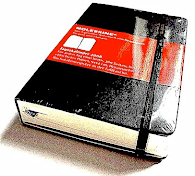
 BLOOM is proud to announce the arrival of the Moleskine City Guides. We are going to present them locally next week. Meanwhile you can come to test and then drive them home with you.
But for now there's something else. We are also thrilled to join MOLESKINE and be part of its first collaboration with Air France to mobilize the creative input of the travellers’ community. Do you love travelling? Do you always keep a Moleskine in your pocket? COME and JOIN this fabulous contest that may allow you to win a trip to Paris. The most nomadic Moleskine challenge of the year: An invitation to all travellers in Asia to design their ultimate travel journal.
THIS ARE THE RULES OF THE GAME:
* ENTRANTS
The application process is open to anybody regardless of age, nationality or sex. Entrants should reside in Asia.
* ENTRY PERIOD
Entrants should fill the online registration form and send back their completed travel notebook between March 1st, 2007 and June 30th, 2007
* FEE
There is no application fee. However, the applicant will have to purchase the Moleskine notebook used for this contest and bear the costs for creating the artworks and postage costs for sending the notebook to our office.
* APPLICATION METHOD
1. Fill in the registration form.
2. Send your completed travel notebook to the following addresses:
Working Unit Ltd. B/F. 9 Dragon Road. Tin Hau. Hong Kong.
Or Books Actually. 2/F. 125A Telok Ayer Street. Singapore.
COME TO WIN ONE TRIP TO PARIS, ANYONE CAN JOIN!
TO PARTICIPATE IN THIS EVENT YOU WILL NEED TO CREATE A TRAVEL NOTEBOOK!
YOU JUST NEED TO CHOOSE ONE FROM THE WILD RANGE OF MOLESKINES!
THEY ARE ALL AVAILABLE AT BLOOOOOM!
* DEADLINE FOR SUBMISSIONS IS JUNE 30TH, 2007
"The only moments I have when I play that are worth anything to me are when I can blissfully ignore the people I am supposed to be entertaining," wrote the American pianist William Kapell to a friend, the pianist Shirley Rhoads, from Australia, where he was unhappily on tour in 1953.
No me; no silly public to amuse; only the heart and the soul, the world, the birds, storms, dreams, sadness, heavenly serenity. Then I am an artist worthy of the name... Until it happens, or if it doesn't happen, I am miserable...
 More than half a century has passed since Kapell died in a plane crash returning from Sydney. He was thirty-one. Revered by pianists, he is no longer widely familiar to the public, having been largely ignored after his albums went out of print by the 1960s. A generation of American pianists who looked to him as an inspiration—Van Cliburn, Byron Janis, Eugene Istomin, Leon Fleischer, Gary Graffman—supplanted him; then younger players succeeded them.
Was there any greater American pianist born during the last century than Kapell? Perhaps not. Certainly he was the most famous American-born player until Van Cliburn. He was a jukebox star during the 1940s, thanks to his performance of Khachaturian's Piano Concerto, a noisy showpiece that Kapell came to resent, in the way that Rachmaninoff came to loathe his own Prelude in C-sharp Minor.
He was also a stereotype of a native New Yorker: bright, brash, tactless, competitive, funny, cocky, and thin-skinned. He could be exceptionally generous and also nasty. He was a nervous, obsessive person—and meticulous (he kept a diary to record, down to the minute, how long he practiced each piece, toting up the numbers month after month).
As the pianist Eugene Istomin once put it, Kapell was not an easy man, but he was a great one. At the keyboard he sat erect and was both intense and masterful, but his stage mannerisms could be curious and distracting; he waddled impatiently onto and off the platform, and occasionally made twitching movements during the orchestral parts of a concerto, occasionally even pulling a comb from his back pocket to scratch. There was a sense of edginess, a ferocity, about him and his musical sensibility.
"Anger hardly does it justice," Jerome Lowenthal, who was Kapell's student and a teacher at Juilliard, told me recently, recalling Kapell's periodic fits of displeasure during their lessons, which might go on for hours, and which Kapell provided free of charge. "He was poetic, charming, sweet, amusing, but he could also be a very scary person," Lowenthal said. On the only film of him, a segment of Omnibus, the early television program hosted by Alistair Cooke, who was a friend of Kapell's, Kapell looks as if he's ready to murder Cooke when he interrupts the pianist before the end of a piece.
In a postwar world still dominated by turn-of-the-century European pianists, audiences found in Kapell something new: the first modern American star, not intimidated by Old World styles; he was fresh, a stupendous virtuoso, rivaling Horowitz. His playing was electric but also lyrical, guided by an instinct for architecture, with a beautifully conceived sense of musical line.
in "The Undefeated" by Michael Kimmelman
The New York Review Of Books -Volume 52, Number 5 March 24, 2005
[MORE]
Hope you can have William Kappel's works at BLOOM in the near future...
the short poemI hate writing reviews. I also hate the consumer as much as the producers of goods for the most part but right now I'm feeling sprendthrift towards humanity due to all the Yuletide cheer. This book is rubbish. Nearly all of the posthumous books released by Black Sparrow/Ecco of Buk's work are fifth-rate, fragments of his glory days of skid-row bum-dom. It's as if they scraped his cancerous boils and produced enough DNA to put his soul back to life in a maggot's body with a Frankenstein's aptitude for producing works of art. The result is echoes of echoes of a former greatness. The rawness of the famed writer is lost in complete drunkenness and scraps of poems that were never published in books because they were leftover material. Maybe that's why John Martin sold off the rights because he couldn't continue to publish a dead man's best of works for obscene sums of money. If they retitled it "WORST OF THE WORST: AFTERMATHS OF GLORY Vol. 5" I might feel better about the whole thing. But as is this is vainglorious puke.
like the short life
may not be the best thing
but
generally
it's
easier.
this is a short
poem at the end
of a
long
life
sitting here
looking at
you
now
then
saying
adios!
CHARLES BUKOWSKI in "Slouching Toward Nirvana"
Reviewer: Boz Hubris
On Christmas Day, 1956, the police of the town of Herisau in eastern Switzerland were called out: children had stumbled upon the body of a man, frozen to death, in a snowy field. Arriving at the scene, the police took photographs and had the body removed.
The dead man was easily identified: Robert Walser, aged seventy-eight, missing from a local mental hospital. In his earlier years Walser had won something of a reputation, in Switzerland and even in Germany, as a writer. Some of his books were still in print; there had even been a biography of him published. During a quarter of a century in mental institutions, however, his own writing had dried up. Long country walks—like the one on which he had died—had been his main recreation.
The police photographs showed an old man in overcoat and boots lying sprawled in the snow, his eyes open, his jaw slack. These photographs have been widely (and shamelessly) reproduced in the critical literature on Walser that has burgeoned since the 1960s.1 Walser's so-called madness, his lonely death, and the posthumously discovered cache of his secret writings were the pillars on which a legend of Walser as a scandalously neglected genius was erected. Even the sudden interest in Walser became part of the scandal. "I ask myself," wrote the novelist Elias Canetti in 1973, "whether, among those who build their leisurely, secure, dead regular academic life on that of a writer who had lived in misery and despair, there is one who is ashamed of himself."
AN ESSAY BY J. M. COETZEE THAT CAN BE FOLLOWED HERE
 A man pieces together clues to his past—and the identity of his captors—in this fantastic, labyrinthine novel
An old man awakens, disoriented, in an unfamiliar chamber. With no memory of who he is or how he has arrived there, he pores over the relics on the desk, examining the circumstances of his confinement and searching his own hazy mind for clues.
Determining that he is locked in, the man—identified only as Mr. Blank—begins reading a manuscript he finds on the desk, the story of another prisoner, set in an alternate world the man doesn’t recognize. Nevertheless, the pages seem to have been left for him, along with a haunting set of photographs. As the day passes, various characters call on the man in his cell—vaguely familiar people, some who seem to resent him for crimes he can’t remember—and each brings frustrating hints of his identity and his past. All the while an overhead camera clicks and clicks, recording his movements, and a microphone records every sound in the room. Someone is watching.
Both chilling and poignant, Travels in the Scriptorium is vintage Auster: mysterious texts, fluid identities, a hidden past, and, somewhere, an obscure tormentor. And yet, as we discover during one day in the life of Mr. Blank, his world is not so different from our own.
A chilling story of isolation... TRAVELS IN THE SCRIPTORIUM is part dystopian myth and part literary seance; allusions intersect with allusions, identities are fluid, the past is folded almost chokingly tight into the present, shadows of the truth have shadows. All of this refracting inventiveness is why Auster is often referred to as a master of the metaphysical detective story. While in these pages there's no actual detective working a beat, still, as revelation after revelation is delivered, the reader is kept on edge, guessing until the very end. Auster is one of our most intellectually elegant writers. He has persistently subverted the ordinary mechanisms of suspense, chronology, even genre. In certain fundamental attributes, this new novel resembles his Oracle Night, published in 2003. Yet determined readers come to savor the inimitable way Auster keeps restructuring and vivifying his novelistic obsessions. Themes are hungry ghosts, Borges said. Fortunately, Auster’s ghosts are insatiable.Paul Auster is the bestselling author of twelve previous novels, including The Brooklyn Follies, Oracle Night, The Book of Illusions, and Timbuktu. His work has been translated into more than thirty languages. He lives in Brooklyn.
"Travels in the Scriptorium" - Paul Auster
Henry Holt and Co ● ISBN: 0805081453 ● HARDCOVER ● and it's on the way...
Check THIS beautiful site about the realms and limits of the human eye.
Macau is this and is running wild!
1 comments Semeado por / Sowed by: Bloom * Creative Network at 01:54
 A Guerra & Paz comemora o seu primeiro aniversário lançando dois novos livros: “Porque é que as Mulheres Gostam dos Homens”, de Helena Sacadura Cabral e “O Despertar do Irão”, da Prémio Nobel da Paz, Shirin Ebadi, títulos que estão já nas livrarias portuguesas.
A editora, ao longo do seu primeiro ano de actividade publicou 38 novos títulos e fez duas reedições, a do “Livro Perigos Para Rapazes” e a da “Correspondência” de Jorge de Sena e Sophia de Mello Breyner. Para além dos citados escritores, publicou autores prestigiados como Agustina Bessa-Luís e Eduardo Prado Coelho, Eça e Camilo, Fernando Pessoa e Sade. A vários títulos, de prefácios a participação em obras colectivas, a Guerra & Paz teve também colaborações de figuras da vida portuguesa que vão de Mário Soares a João Pereira Coutinho, passando por Maria Filomena Mónica, Nuno Markl e Frederico Lourenço para citar apenas alguns. Com um catálogo estabelecido à volta de dez colecções, a Guerra & Paz firmou, neste primeiro ano, uma parceria com as Produções Fictícias que levará à publicação de cerca de 12 títulos ao longo de 2007.
Em 2007, a editora vai publicar um total de 50 títulos, dos quais se destacam reedições de Agustina Bessa-Luís, um livro sobre Picasso e, já no final deste mês, as “Memórias” de Raymond Aron.
O MUNDO FECHADO
O mais novo de todos os meus livros é o Mundo Fechado. É limpo de intenções, como as crianças. E doce de encontros, como os que as crianças têm com uma ave que caiu do ninho. Escrevi-o em Coimbra, tinha casado há pouco e a minha filha dormia à tarde no quartinho ao lado do nosso. Era o tempo que eu tinha para escrever, e via da janela o jardim calado e deserto, como é bonito ver os jardins.
A casa deliciosa, que em princípio devia ser a morada do chauffeur, era arrendada a estudantes porque eles não paravam muito tempo e assim se renovava a renda sem discrepâncias. Mas a senhoria, D. Augusta, de muitas rezas e sentimento cristão, dava-se bem comigo e digo até que me protegia das línguas beatas. Não me viam na missa, e disso tiravam más ideias. Não acertavam, porque quem muito cumpriu com o céu desde a infância, se torna familiar demais com os ritos para ser com eles pontual. Tornámo-nos como contínuos de ministérios: um pouco ateus duma ordem que servimos.
O Mundo Fechado foi o meu primeiro livro a ser publicado. Impresso na tipografia Gráfica de Coimbra, ele foi integrado na colecção bibliográfica Mensagem, iniciada em 1941 por José Vitorino de Pina Martins, então estudante universitário e que veio a ser professor catedrático, hoje Presidente da Secção de Letras da Academia das Ciências de Lisboa. É da sua autoria a primeira notícia da publicação do livro, saída no Osservatore Romano.
Foi um livro airoso e profético. Anunciava uma carreira, conhecia já o seu destino. Mandei-o aos maiores das Letras, Aquilino, Ferreira de Castro, Torga. E Pascoaes, de quem recebi a carta que aqui vai impressa. Recebi-a dois anos depois de ele ter morrido, eu já tinha desesperado de o ter por admirador. Porque o mundo era coisa que queria a meus pés sem ter ambição, apenas a graça da vontade. Para ter vontade é preciso graça; foi a graça do desejo que fez Sara ter um filho aos noventa anos. Percebam isto e percebem muita coisa.
Agustina Bessa-Luís
 A primeira obra que Agustina Bessa-Luís escreveu, publicada em 1948 e esgotada desde então, classificada de raridade bibliográfica, é finalmente apresentada por Guimarães Editores.
Esta novela constitui uma antecipação de A Sibila, quer pela temática, quer pelo estilo que tornariam famosa e um dos primeiros representantes na literatura portuguesa a sua Autora.
"Mundo Fechado" de Agustina Bessa-Luís
Guimarães Editores ● ISBN: 9726654955 ● 128 Páginas
[ALGUNS DIAS MAIS E ESTARÁ DISPONÍVEL NA BLOOM]
 [ILUSTRAÇÃO DE RUI RASQUINHO]
 O Livro "Sob Céus Estranhos - Uma História de Exílio" de Daniel Blaufuks tem o seu lançamento marcado para o dia de hoje, às 18,30, na FNAC Chiado. Corra que ainda chega a tempo.
Após a apresentação do livro por Richard Zenith, será projectado o filme com o mesmo nome.
Daniel Blaufuks nasceu em Portugal em 1963.
A partir de 1987 frequentou o curso de Fotografia do Centro de Arte e Comunicação Visual (Ar.Co.) e, na década de 90, prosseguiu os seus estudos no Royal College of Art em Londres e no Watermill Center de Nova York.
Começando por exercer a sua actividade como freelancer em diversas publicações portuguesas, distanciou-se progressivamente do fotojornalismo.
Fez a sua primeira exposição individual na Galeria Ether depois de receber o “European Kodak Award”, em 1989.
Posteriormente, publicou um conjunto de Séries Fotográficas:
My Tangier, 1991
Cinema Paraíso, 1991
London Diaries, 1994
Uma viagem a São Petersburgo, 1998
Andorra, 2000
Lisboa, Pessoa, Exílio, Saramago, 2001
Já este ano, conquistou o Prémio BES Photo 2006, a maior distinção nacional para a Fotografia, com um trabalho realizado sobre o Campo de Concentração nazi Theresienstadt, hoje situado na República Checa.
Leo Spitzer, Professor de História do Darthmouth College, apresenta assim o Livro:
Sob Céus Estranhos é uma meditação evocativa e poética sobre a experiência dos refugiados da Europa Central e sobre um sentimento de dispersão em trânsito na cidade de Lisboa e nos seus arredores.É uma edição da Tinta da China, a primeira no campo da fotografia, com toda a qualidade e detalhe que fazem desta editora uma das melhores em Portugal. Obra que estará em breve disponível na Bloom.
É uma descoberta comovente, positivamente modesta e humana do espaço, do tempo e do desenraizamento, transmitidos de geração em geração, dos avós que partiram da Alemanha para Portugal, para os pais, para o neto. Poucos refugiados permaneceram em Portugal depois de a guerra acabar, mas os avós de Blaufuks, ao contrário de tantos outros, decidiram não seguir viagem nem voltar para a Alemanha.
Tendo crescido em Lisboa, no quinto andar do mesmo prédio onde moravam os seus avós, Daniel Blaufuks viveu a infância num universo de vestígios dessa experiência dos refugiados - um mundo de alusões, fotografias, alguns objectos, comidas, costumes e memórias que não eram as suas, mas que acabaram por o atrair e marcar de forma indelével.
Utilizando algumas dessas reminiscências, bem como filmes da época e de família, excertos de memórias e textos de refugiados, relatos de família e materiais de arquivos europeus e americanos, Blaufuks oferece-nos um vívido documento com uma bela imagem sobre um momento significativo da história do século XX.
O resultado - belo, delicado - é testemunho de uma importante, ainda que muitas vezes menosprezada, verdade. Apesar da sua natureza imperfeita, apesar da sua incapacidade para captar e comunicar a experiência através da memória, a transmissão entre gerações é envolta em valores e em lições que podem efectivamente passar de pessoa para pessoa, de geração para geração, através dos tempos.
[AGRADECIMENTOS AO 'NÃO APAGUEM A MEMÓRIA' DE ONDE FOI RETIRADA A INFORMAÇÃO CONTIDA NESTE POST]
 Não tinha nome mas era porque não lhe apetecia. Inventava nomes todos os dias para os corpos que passavam, às centenas, na rua onde ia flutuando de quando em vez, nesses últimos tempos quase sempre. Havia quem jurasse ser um homem famoso lá na outra terra, aquela sem nome também, o nome até estava debaixo da língua, ele era tido e reconhecido, sim, diziam, mas o nome não saía, não chegava a existir.
Barba comprida, mas esguia. Meia dúzia de pêlos sombrios, encaracolados do dedo indicador da mão esquerda que fazia rodar enquanto pensava. Um tique em nada semelhante ao dos outros pensadores, os que vinham nos livros. Cabelo variável. A navalha guardada debaixo do lenço de muitas cores, atado à cintura. Navalha para outros fins que não carne. De qualquer espécie. Calças a deixar ver uns tornozelos magros. Chinelos com uma tira, da mesma cor da carne. Dele.
Profissão: nenhuma que se pudesse inscrever em listas oficiais para atribuição de pensões que nunca quis. Escrevia. Era escritor. Ficou sempre por saber se escrevia prosa-prosa, prosa poética ou poesia. Mas isso também já não interessa, dizem aqueles que têm o nome debaixo da língua. Outros, os mais interessados por essas coisas da cultura, asseguram que escrevia sobre a vida e de todas as formas, da prosa mais esculpida à poesia mais impura, a que sai de dentro. E escrevia sobre a vida, que era a única coisa que tinha, argumentavam sem grandes certezas.
Certo é que escrevia, disso ninguém duvida, rolos e rolos de papel que não se sabe onde desencantou. Escrevia sempre de pé, apoiado ao muro debaixo das escadas. E não era um vão vulgar o escritório-casa-rua. Desde logo pela localização, que o material de que é feito é cinzento como todos os outros. Mas fica ali, entre o jardim das grandes festas de damas e cavalheiros de outros tempos, quando ainda existiam, quando ele ainda tinha um nome provável, e a rua onde se vendem todas as altas e baixas tecnologias. Também não era um vão de escadas vulgar porque eram rolantes. As escadas.
Tinha uma caligrafia alinhada, minúscula, por isso escrevia muito perto dos rolos, o braço esquerdo a enrolar os cabelos quase sempre compridos, esguios. O corpo frágil, atado, debruçado no muro. A ameaçar cair. Num estranho equilíbrio, um movimento constante, o mesmo dos desenhos que fazia, com uma rapidez controlada, nas horas depois da rua acalmar.
De dia desaparecia, nesses últimos tempos quase nunca. Deixava-se ficar e via quem passava, quase todos com um nome, num corropio de palavras sussurradas e quase ensurdecedoras. À noite também falava, mas pegava nos rolos, afastava o muro do corpo e ia por ali, sem nunca pisar o jardim. Lia. Ninguém conseguiu alguma vez identificar as palavras todas que dizia, também não eram assim tantos os que passavam ali àquela hora. Há, no entanto, quem jure a pés juntos que não era sobre a vida, ai isso não, que da vida dizia nada saber.
As palavras eram todas sobre fantásticos acontecimentos, coisas inimagináveis, absurdas, jamais pensadas. Esses que dizem ter percebido não tudo, mas algumas partes, asseguram que todas as palavras eram encantadoras, especialmente aquelas que eram inventadas e, por isso, tinham os sinónimos dos sonhos. Os menos interessados por essas coisas da cultura dizem que não há palavras e muito menos sonhos, declarações feitas em entrevistas concedidas ao abrigo de prédios de trinta andares.
Não que alguma vez tivessem tentado, mas os que com ele quiseram um dia privar mais de perto – dizem os que têm o nome debaixo da língua, que não se conhece quem com ele tenha querido qualquer espécie de privacidade -, nunca conseguiram tocar nos rolos. Nem na barba. Nem no cabelo. Nem sequer no dedo indicador da mão esquerda.
Morreu durante a noite. Ninguém se lembra do momento, das circunstâncias, das causas, nem da ambulância ou do funeral com papéis a arder ao vento.
Desconhecem-se mulher e filhos.
Fotografia roubada (de novo) a Renato Roque
 Não há uma única "ideia" em "Beatles". Não há uma única inquirição existencial acerca do "ser humano". Não há longos monólogos metafísicos, elucubrações acerca da "verdade" ou do "real" - tudo questões fundamentais quando se lida com um conceito como o de "identidade", algo de fundamental no século XXI - e que atravessa, como uma seta invisível e cega todo este romance. E, no entanto, todos os vectores acima mencionados estão presentes ao longo das quase 600 páginas de "Beatles", diluídos num brilhante (apesar de extremamente discreto) trabalho de linguagem, afundados na discreta estrutura interna. "Beatles" é, mais que um romance sobre a adolescência (embora tenha como personagens quatro adolescentes na segunda metade dos anos 60, na Noruega), um romance sobre o crescimento e a identidade. É, por isso, um romance que vive do constante instaurar e ruir de absolutismos, que vive da distância entre as diferentes reacções que a mesma personagem tem face a eventos semelhantes. Narrado por Kim (que, num truque extremamente inteligente por parte de Lars Saabye Christensen, é constantemente apelidado de "mentiroso"), "Beatles" não se fica pelo "quadro histórico"; antes os acontecimentos (o Vietname, o Maio de 68) funcionam com um pano de fundo, um pano de fundo que permite perceber o funcionamento interno das personagens. Antes de mais, porque eles vivem de uma "realidade emprestada" (têm acesso aos acontecimentos da época pela televisão e jornais, e era a primeira vez na história da humanidade que o mundo se observava mutuamente numa espécie de estratégia de vigilância); depois porque, por exemplo, durante uma manifestação antiguerra do Vietname a preocupação dos quatro é a possível separação dos Beatles. O livro demora-se nos pormenores de adolescência: bombinhas, o roubo de uma revista porno, a primeira cerveja. A descoberta das raparigas. A lógica de grupo. A verdade absoluta e a descoberta da mentira: aos amigos, aos pais, dos pais aos filhos, dos filhos entre si. O nascimento da consciência social e dos escalões sociais. A abundância de pormenores faz-nos "crer" na gravidade das angústias de cada um daqueles miúdos - e a universalidade das "vinhetas" (usadas de forma quase cinematográfica e com um agudo sentido de humor "nonsense") permite ultrapassar o fenómeno geracional. A segunda parte do livro é mais crua e negra. Corresponde ao pós-Maio de 68, à explosão da heroína, ao fim dos Beatles - o fim do preto e do branco. A linguagem das personagens é também diferente. Há um sentimento de desnorte naquelas personagens, ampliado pelo ruir de velhas dicotomias e normas sociais. Em última instância, é apenas uma história extraordinariamente bem contada que leva às últimas consequências as palavras de John Lennon: "Tomorrow never knows" - o que, tendo em conta a idade das personagens, torna "Beatles" num romance sensível, de um humor refinado e comovente, capaz, aqui e ali, de ser cruel. Lê-se de uma penada e sabe "a um Verão inteiro e a meia infância". [JOÃO BONIFÁCIO in Público]
"Beatles", que consolidou o sucesso de Christensen, tendo vendido 200.000 cópias, apenas na Noruega, é uma história da geração de 60, que nos mostra quatro rapazes que vivem e festejam cada novo single dos Beatles com todo o envolvimento, tendo como pano de fundo o cenário político da época (o comunismo na Checoslováquia, a guerra do Vietname...). Uma saga quase familiar sobre a descoberta do mundo, do amor, e da vida como ela é na época do sexo, droga e rock'n'roll, cheia de humor, e a escrita transparente do grande escritor norueguês.
"Beatles" de Lars Saabye Christensen
Cavalo de Ferro ● ISBN: 972-8791-97-6 ● 560 Páginas
 D'mond, Lenhador and Eljeco are The Chopstick Dominators. The group were formed in 2003 in Macao. The fusion between electronica and punk got the band to their unique sound with a 'shake the floor' attitude that captivated a friendly crowd. In 2004 the group oppened 'The Studio', a upperground space located at the 17th floor at the city center, where arts and music stay hand in hand in a cutting edge option, nobody know where is it, you just have to follow the wonderground. The Chopstick Dominators team up with several DJ's, performers, musicians, video artists and friends in unexpected collaborations.
Check "THE REFLEX" at YouTube.
[GET DIRECTIONS THROUGH OUR MAP SO YOU DON'T GET LOST]
- Pergunto porque é que usam porco. Este povo não é consequente em nada, nem sequer no uso das palavras. Dizemos sempre suíno.
- Basta o capricho de um jornalista e todo o país falará da guerra ao porco – assinalou Rey.
- Não acredites nisso – advertiu Dante. – A Crítica chama-lhe Caçada de corujas.
- A coruja parece-me melhor. É o símbolo da filosofia – declarou Arévalo.
- Mas confessem – disse Jimi, apontando para Arévalo e para Rey – que vocês os
dois preferem que vos chamem suínos.
in "Diário da Guerra aos Porcos", de Adolfo Bioy Casares
 Jorge Luis Borges disse-lhe:
“Muda o título. É um romance perfeito mas vais ficar com um porco associado à tua obra para toda a vida.”
Desconhece-se a resposta de Adolfo Bioy Casares - se é que resposta houve - , mas certo é que o título manteve-se.
Um título para uma obra de extraordinária ironia, daquelas que se lê de uma assentada só, de um só fôlego. Entre uma esplanada e um avião. 234 páginas dadas a conhecer, em português, pela Cavalo de Ferro.
Bioy Casares imagina uma Buenos Aires em que os velhos – ou aqueles que parecem sê-lo – são perseguidos, torturados e mortos por grupos de jovens. Há uns que escapam, outros que nem por isso. Não é um livro nem moralista nem dramático, bem antes pelo contrário. É um modo de escrever quente e frio, nunca morno.
Também não é um livro de descrições nem de contextualizações. É um livro de uma vida, a de Vidal, cruzada com outras vidas. E Adolfo Bioy Casares tem a mestria de nos fazer imaginar rostos sem sequer os descrever, de deixar as conclusões à vontade do freguês. A minha, se a tenho, é de que a vida é só isso e é tanto. A vida.
Source: peopleandplanet.netConcern over the world's booming human population - which has grown from three to over six billion in just 40 years - has abated somewhat as birth rates have fallen right across the world. But there is still a long way to go before numbers stabilise at somewhere between eight and 11 billion - and some countries, such as Pakistan or Nigeria, are on course to triple their numbers by the middle of this 21st century.
Globally, many experts are concerned that the earth's 'carrying capacity' is already overstrained, and worry that the huge impending increases in consumption in countries such as India and China will add enormously to the burden of greenhouse gases which threaten to heat the planet - not to mention all the other demands which increases in both population and consumption are putting on the earth's natural systems.
[CONTINUE READING HERE]
 "Endangered - Wildlife on the brink of extinction" by George McGavin
Cassel Illustrated ● ISBN-13: 978-1844034956 ● Oct 2006
[MORE ON THIS SUBJECT HERE]
Questions and bits with Mary Chan [MCCM Creations]
0 comments Semeado por / Sowed by: Bloom * Creative Network at 00:37 1. Who is Mary Chan?
Except for a pure Chinese genetics and inheriting a bit of looks and temper from parent, MC is quite a hybrid. Lucky enough, our material world is becoming more hybrid than ever, somehow MC fits in - somewhere.
2. What made you go into books' publishing?
A long complex story. To cut it short – One day in 2000, I bumped into our first author, and was shown a children manuscript, I like the story and the subject right away, well, with no idea of what the illustrations will be. Having complete confidence in the author’s illustration works, we come up with a book format, here we go - the first title was published in Mar 2001 – Where is The World? by Peter Suart.
3. How's the world of publishing in Hong Kong? Do you have institutional support or is MCCM really independent?
Tough… and extremely tough for the genre of books we are into.
MCCM Creations is completely independent. There is always at least one experimental element or more in every book we publish. It is its complete independency that allows us the freedom of trying out new ideas and risking no returns without getting fired.
4. Does the first MC of MCCM stands for Mary Chan, what about the CM? Is it a palindrome? Can your books be read onwards and backwards?
The guess is almost correct. For sure, one must re-read our books, it would certainly be a different reading experience.
5. Making books is the only possible way to say things that could not be said any other way? Or is just entertainment?
Among the diverse medium of expression, books are by far the most travelable and most tactile. Yes, in one way or another, books should ‘delight’ and ‘enlighten’ readers.
6. Would you change the idea of a book just for business sake?
The soul and the charm of a book lay with the originality and integrity of the author(s) works. We only consider adjusting the physical book form to suit readership in book markets of different cultural context, but never sacrifice the soul of the story/works.
7. If you could, what would you like to publish? Which book, which author?
Publishing material should carry a spirit and a life of its own – whether it’s fiction or non-fiction. We fancy for books with words and images of fine art quality. We also love to work with authors who have a generous heart to give as well as a strong will and principle towards life and the world.
8. What are your views about the end of traditional printing and the change to digital format, like electronic ink (e-ink) and electronic books?
Physical books will never die. Nothing can replace the physical book so long as there are people loving to touch papers, to feel and to flip a book with hands.
Both physical book and e-book will exist but electronic medium will definitely become more dominating in the next 10 – 15 years with this generation of people going more into e-communication.
9. Between the world of books and the world of newspapers if there was a war who would survive? Could the World survive without any of them?
In this imaginary war, books would win in the physical world and newspapers will triumph in the net world.
10. Do you stand for direct elections? Do you care?
Only when the general public has a clear and rational judgment to identify what they seek for and what exactly they need, direct election would then work.
11. Do you think Al Gore should be the next Nobel Prize for Peace? Are you an environmentalist? Are you worried? What is your dream world?
Al Gore is one of the timely facilitators who bring attention to many the most-threatening scenarios we are in. But don’t know why he is associated with Nobel Prize for Peace.
I treasure the nature and the environment we are living in. If we attune ourselves to the basics – no wastage, no excessive wants, no excessive use, no excessive desires, lesser greed, we could have a more peaceful naturalistic world.
12. How do you see Macau from overseas?
People, place and personal experience create impressions on a place. Likened to having same mother with different fathers, Macau, to me, having an easy and gentle disposition, is now a lively and energetic sister to Hong Kong. Seeing one can’t change the fact - Macau will be a ‘Las Vegas in the Orient’ – I only wish the flashiness won’t take away the living heritage of the local Macanese.
13. Any special word for our readers, for us, for the future? What word should be written on the walls of every city if there could be only one?
Revisit your roots. Back to the basics.
...
Mary Chan lives in Hong Kong glowing MCCM Creations, that keeps publishing, since 2001, some of the most beautiful and unique books in the world.
Parque Natural de Outras Espécies
0 comments Semeado por / Sowed by: Bloom * Creative Network at 19:21Um tipo jovem, ainda nos bancos da universidade, escreve um romance que é um best-seller e torna-se de repente rico e famoso, para, pouco depois, ver o seu insuportável pai reduzido a um saco de cinzas numa casa-forte, precisamente num momento em que a sua celebridade se começa a afogar num mar de degradação e de abuso de drogas.
Dez anos mais tarde, aparentemente recuperado dos excessos, tem uma segunda oportunidade, vivendo com a mulher e os filhos num ambiente de sobriedade suburbana; numa questão de poucos dias, porém, a sua vida nova desfaz-se completamente e torna-se irreconhecível.
Na novela Ellis, a personagem, casa com uma actriz de quem tem já um filho, muda-se de Los Angeles para Nova Iorque e começa a trabalhar num novo romance quando, em poucos dias, tudo lhe começa a correr mal. Numa fatídica festa de Halloween, vê passar uma perturbadora personagem (de ficção) ao volante de um carro idêntico ao do seu falecido pai, a boneca da sua enteada de repente começa "a funcionar mal" e a sua casa torna-se possuída por espíritos estranhos e ameaçadores. Ligando estas aberrações a acontecimentos mais graves - uma série de assassinatos grotescos ocorrem na zona onde mora e vários rapazes com a idade do seu filho desaparecem misteriosamente - Ellis luta para defender a sua família dessas crescentes ameaças, enquanto a sua mulher, os seus terapeutas e a polícia insistem em que as suas apreensões são provocadas, na realidade, pelo abuso das drogas e pela egomania e se devem apenas ao delírio.
Lunar Park, o último romance de Bret Easton Ellis, vai de surpresa em surpresa, misturando a comédia com o horror em crescendo (quer psicológico quer sobrenatural), numa espantosa reflexão sobre o amor e a perda, os pais e os filhos, naquele que é, sem dúvida, o livro mais tocante e mais original de uma extraordinária carreira.
Narrado num falso estilo memorialístico por uma personagem chamada Bret Easton Ellis, autor de bestsellers, este livro assume um evidente pendor autobiográfico sem a pretensão de se manter fiel aos factos. Escrito pelo autor que se tornou famoso por explorar os excessos da era Reagan (abuso de drogas, promiscuidade sexual e assassínio em série), este romance gótico e sobrenatural coloca a hipótese de serem os demónios interiores da personagem/autor que lhe destroem a casa, desmembram a família e impedem a felicidade. Vinte anos depois da sua estreia, aos vinte anos, Bret Easton Ellis confirma todas as qualidades que fizeram dele um dos nomes mais importantes da sua geração.
"Lunar Park" de Bret Easton Ellis
Editorial Teorema ● ISBN: 9726956463 ● Ano de Edição: 2005
[I'M SORRY BUT THIS FILE WAS LOST. WE'LL TRY TO RECONNECT IT]
A lot of photographers think that if they buy a better camera they'll be able to take better photographs. A better camera won't do a thing for you if you don't have anything in your head or in your heart.I think that you can even take a photograph without any camera. Just use your hands, or your eyes. Get a glimpse of what you see and save it in your mind. Save it clearly, regarding the light, the composition and its depth. Keep it in hand, in your memory, where you can always recall it when is needed. Share it with others whenever you feel like.
Arnold Newman
Estava escuro e eu estava à espera de alguém, na rua onde fica a minha casa. Um bairro com árvores e edíficios cúbicos, baixos. Quando digo escuro, a única coisa que se via era o meu isqueiro que estava aceso para iluminar uns papéis que tinha na mão. Um isqueiro ou uma luz a pilhas, daquelas de campismo. Já não me lembro. O que se ouvia era um pouco de frio húmido que passava e as minhas mãos a remexerem nos papéis. Que pareciam de rebuçado, mas não eram.
Pouco depois, do outro lado da rua, algures na escuridão, uma voz feminina, que trazia uma pistola e me queria matar. Falava com alguém ou sozinha. Parecia
que falava com o pai. E queria disparar para cima de mim. Do escuro, para a
minha presença iluminada por um isqueiro ou uma pilha feita de luz.
E disparou. Bang. Disparou seis vezes. E não acertou nenhuma. Porque eu me desviei. Ou porque talvez tivesse falta de pontaria.
E daí não sei bem, se me acertou. Se calhar acertou-me em cheio. Matou-me!
Só que eu ainda aqui estou, ainda consegui vir aqui contar a história, por isso talvez não esteja tão morto como isso. Talvez ainda esteja vivo e com coisas para fazer.
Lembro-me de a ouvir e a última coisa que ela disse foi: "Anda, este já está!"
Estava furiosa e queria matar todos os homens que se portam mal com as mulheres, pensei eu, mesmo assim pode ainda ter sido o que ela rugiu antes de desaparecer por completo. Era uma redentora, uma gurrilla girl. E eu conhecia-a de qualquer lado. A ideia da cara dela, no meio da escuridão, com aquela voz, não me era estranha. Ou mesmo o cheiro a molhado.
Não sei, posso estar errado.
[Escrito há muito tempo e encontrado aqui.]
 Talking with: Edith Grossman
Translation is an art and behind every great foreign-language author, there is a great translator capturing the tone, energy, and nuances of the work. For twenty-three years, Edith Grossman has been working with Gabriel García Márquez. As an award-winning translator of poetry and prose by several Spanish-language writers, she has mastered the skill of representing different tones and dialects, many of which we are not familiar with in America. Here, she talks about the experience of translating García Márquez's last work, the long-awaited memoir.
Interview conducted by Luba Ostashevsky
Q: How did you come to translate Gabriel García Márquez?
A: Lee Goerner, who was García Márquez's editor at Knopf in the 1980s, was looking for a translator for García Márquez's new book, at that point tentatively titled Love in the Time of Plague, and the word went out for a submission of sample chapters. I sent in 20 pages or so. I’m not sure how many other translators submitted samples,but mine was chosen.
Q: What do you find to be most challenging and most rewarding about translating García Márquez's books?
A: The challenges and the rewards are the same: to recreate for an English-speaking reader the artful language that a good writer uses, and García Márquez is more than a good writer. This requires a deep familiarity with English and its levels of discourse. You have to decide what level of English to use. You have to decide whether you’re going to use, for example, “teacher, master, instructor, or professor.” In the General in his Labyrinth, Bolívar used a very elevated language when with ladies but an often vulgar one with his soldiers. One of the reviews of my translation said I made Bolívar sound like a cop from the Bronx. I was concerned and told García Márquez, but he laughed and said that was exactly the effect he wanted to produce.
Q: What is different about translating this book of non-fiction as opposed to translating the novels?
A: I don’t think there is much difference. García Márquez keeps pointing out that fiction and journalism are essentially the same genre. For example, the British press couldn’t believe that the events depicted in News of a Kidnapping, which is an investigative report about murder and kidnapping in Colombia, actually happened, and it ended up listed as fiction.
García Márquez prides himself on writing every book as though he were a reporter. The same goes for this book of memoirs. As a matter of fact, he usually hires assistants to research background material. As opposed to writers who see their writing through the prism of their inner life, he tends to view himself and others more objectively, focusing on the external as the key to emotional life.
Q: What do you learn about Spanish-language/Latin American literature when you translate García Márquez?
A: English has a variety of pronounciations and languages, ranging from the West Indies to the East Indies, and a number of places in between. Similarly, during the age of discovery, Spain colonized vast territories in Latin America, and these versions of Spanish have been evolving for a good 500 hundred years; you can imagine the range and breadth of vocabulary and usage. Because García Márquez’s Spanish is predominantly Colombian, I am obliged to learn a number of words that exist nowhere else. He uses regionalisms, expressions that are limited to a particular class, words confined to a small town or a particular district. I consulted with three Colombians on some lexical puzzles in this book, and even they had trouble with some of them. One excused himself by saying this was a phrase from the mountains whereas he came from the coast.
Q:How has being García Márquez’s translator changed your life?
A: Translating a good writer deepens my perception of good writing in English because it obliges me to sharpen my own writing skills. I’ve been very lucky in my translating career because I admire the authors whose work I have brought over into English, and García Márquez is certainly outstanding among them.
"Living to Tell the Tale "
Written by Gabriel García Márquez / Translated by Edith Grossman
Published by Knopf ● ISBN: 9781400041343 ● Hardcover - 496 pages
 The Chinese book market - practical know-how for publishing companies
How should I handle Chinese business partners? And what do I need to take into consideration if I want to achieve a successful breakthrough on the Chinese book market? A professional seminar with experts provided answers to these questions.
With a population of around 1.3 billion, the People’s Republic of China is the third-largest state in the world. Literacy in the so called Middle Kingdom is at 93 per cent. Around 80,000 bookshops were registered in China in 2005 and a good 220,000 titles were published, of which 120,000 were new publications.
No question about it - the Chinese book market offers great opportunities for international publishers. It does also involve risks, however, because certain peculiarities mean that it cannot be compared to other international book markets. Help and a great deal of practical information for publishers wanting to get onto this market were on offer at the professional seminar held recently in Frankfurt by the Frankfurt Book Fair, "The Chinese book market - practical tips for publishing companies".
There was considerable interest. Around 40 people came to find out about the potentials, peculiarities, problems and challenges of the Chinese book market. For example, there are around 570 publishing companies in China that are all state-owned enterprises and subject to relatively strict state controls. Since China joined the World Trade Organisation in 2001, this control has relaxed somewhat.
New trends and important details for rights and licence trade
The seminar began with Jörg Rudolph from the East Asia Institute at Ludwigshafen Applied Science University giving a general overview of the Chinese economy, its culture and ways of working. "In China, everyone does what he wants, nobody what he should and everybody follows along", was how the sinologist summed up his personal experiences. Information on new trends on the Chinese book market and important details for trading in rights and licences were provided by Jing Bartz from the Beijing Book Information Centre and Cai Hungjun, director of the Hercules Agency.
Bertram Schmidt-Friedrich from Hermann-Schmidt-Verlag reported on his experiences with printing in China, and Ian Taylor, director of Ian Taylor Associations, introduced new sales options for publishing companies in China. Finally, Markus Wegner from the Frankfurt Book Fair talked about Germany’s presentation as guest of honour at the Beijing Book Fair (30 August to 3 September 2007).
Germany guest of honour at the 14th Beijing International Book Fair
There were many questions from the floor. What sort of manners are appropriate in which situations? How do you deal with it when business partners take a long time to respond and how should you react if licence agreements are broken? What’s to be done if excess printings appear? It was apparent here that the exchange of experiences among attendees was useful too, not just the information coming from the speakers. Overall, those taking part judged the seminar to have been very informative and helpful, it was hoped there would be more such events focusing on other book markets.
taken from the Frankfurter Buchmesse's April Newsletter
In 1307, exactly a year before his death, Nampo wrote:
This year, the twenty-ninth of the twelfth
No longer has a place to come to.
The twenty-ninth of the twelfth next year
Already has no place to go.
These words were taken, after his death, as proof that Nampo knew he would die in a year. And so it was: on the twenty-ninth day of the twelfth month, 1308, Nampo took up his brush, wrote the following poem, and died.
To hell with the wind!
Confound the rain!
I recognize no Buddha.
A blow like the stroke of lightning–
A world turns on its hinge.
Although the consciousness of death is in most cultures very much a part of life, this is perhaps nowhere more true than in Japan, where the approach of death has given rise to a centuries-old tradition of writing jisei or the "death poem." Such a poem is often written in the very last moments of the poet's life.
"Japanese Death Poems" is published by Tuttle Publishing and is available near the Hong Kung Temple, two steps away from the Inner Harbour and the river side, in the red wall store you have heard about for quite a while now.
In Bloom from today on until it lasts
0 comments Semeado por / Sowed by: Bloom * Creative Network at 20:11 This may be the most beloved of all Zen books in English. It is a little volume to treasure, to reread and to ponder, to take delight in and to laugh at and laugh with. It is a compilation of four smaller books:
First there are 101 Zen stories. These are the best and most classic of the stories, many of them so familiar that they are now part of American culture as well as Zen culture. The stories constitute lessons in life, insights into our nature and ways to enlightenment or how one has wandered off the path--or better yet, how there is no path and no wandering. Unlike many Zen tales, which can be deeply mystifying to non-initiates, most of the ones presented here are luminous.
Paul Reps and Nyogen Senzaki, who are the transcribers, begin with the famous tale of Zen master Nan-in overflowing a visiting professor's tea cup to illustrate how filled the professor is with himself, so filled he cannot learn anything new. Included are two of my favorites, (1) that of Tanzan and Ekido, the former a monk who carried a pretty girl across a muddy road and his monastic friend who could not let go of her in his mind; and (2) the parable attributed to the Buddha about a man hanging over a cliff holding onto a vine being gnawed on by two mice (one black and one white--yin and yang, perhaps), with a tiger above and another below, and a luscious strawberry. How sweet it tasted indeed! By the way I have recently learned that a variant of this story comes from the Mahabharata as reported by Georg Feuerstein in The Essence of Yoga (1974). There the mice are rats (still black and white) and the man is hanging from a tree over a pit in which waits a giant serpent. He is drinking honey.
Next there is a presentation of the Buddhist classic about koans, their answers, and a commentary called "The Gateless Gate" by the Chinese master Ekai (also known as Mu-mon,1183-1260 c.e.). The spirit of The Gateless Gate" is irreverent and mischievous. The central idea is that the truth lies somewhere beyond the thesis and the antithesis - or, that which can be said and that which cannot be said do not include the whole of it. Most of Mu-mon's comments are deliberately non-rational, but here is one in the form of a poem that expresses the essence of Zen in a nutshell:
It is too clear and so it is hard to see.
A dunce once searched for a fire with a lighted lantern.
Had he known what fire was,
He could have cooked his rice much sooner.
The third book is the famous search for the bull from Taoism which ends in no bull, no search-all transcended, which is an allegory of life and a symbolic representation of learning to meditate. Zen has added here two extra frames which I will not comment on.
The fourth book is something Reps calls "Centering" from an ancient Sanskrit manuscript. It is said to be four thousand years old and purports to be Shiva guiding Devi in enlightenment. There are 112 ways. Its yoga-becoming-Zen feel is really startling. Here are three examples:
8. Attention between eyebrows, let mind be before thought. Let form fill with breath-essence to the top of the head, and there shower as light.
15. Intone a sound, as a-u-m, slowly. As sound enters soundfulness, so do you.
26. Unminding mind, keep in the middle–until.
The book title comes from a story about the first Zen patriarch, Bodhidharma, who rewarded a couple of his disciples for their apperception by saying the one has his flesh and the other had his bones. A third monk won the "contest" by remaining silent. About him, Bodhidharma said, "you have my marrow."
All four books are wonderful, and there is not a speck of dust on any page.
"Zen Flesh Zen Bones - A Collection of Zen and Pre-Zen Writings"
Compiled by Paul Reps and Nyhogen Senzaki - Tuttle Publishing
 All but closed to outside visitors and influence, its public posture guarded and combative, the world sees almost nothing from inside its borders.
Award-winning photographer Mark Edward Harris obtained rare access to this reclusive country, documenting life within its borders, along its northern border with China and the highly militarized demilitarized zone dividing North and South Korea. The compelling photography from his travels is collected in NORTH KOREA. The images he captured are amazing: the monumental architecture and empty streets of the capital; tightly controlled zones of economic and tourist trade with South Korea; mass games featuring 100,000 choreographed participants.
While artistically provocative, the shots provide a window into a land few non-citizens know. "Even though I loved shooting in black-and-white for this book, I knew that people wanted to see the country as it was, not my artistic interpretation," says Harris. "I tried to accurately capture a place that few people get to visit."
Naturally, Harris traveled to the cities, like the capital, Pyongyang. But some of his most compelling shots come from the lesser-known border regions. "A lot of North Korea's money is funneled into its cities," says Harris. "Pyongyang in particular is a showcase in certain ways. That's why trips to the border regions were so vital."
Traveling as an American in this country provided Harris with a unique perspective. George Bush famously named North Korea as a member of his “axis of evil” and Kim Jong Il has exhibited naked aggression toward U.S. government and policies, yet Harris reports that he was received cordially, albeit with some curiosity.
"The Korean people themselves treated me very warmly," says Harris. "There were some soldiers I met, that if looks could kill, I'd be dead right now. But when it came to the people themselves, they made it clear that it was the American government and policies they were against, not the people."
The amount of time Harris spent there allowed him to capture something that is rarely seen of North Korea by the outside world—everyday life. "What we often see in the media are either moments of great horror or great joy. But real life happens in the moments in between. I wanted to capture real moments of human interaction with my shots. A child walking with her father, people on a trolley going to work. People just living their lives."
To see some of Harris' compelling photography, check out this excerpt. And you can send a friend an epostcard of the book's images here.
Win a signed copy!
Email webmaster@chroniclebooks.com with the subject line NORTH KOREA for the opportunity to win one of five copies signed by the author.
SOON AT BLOOM!
 É preciso reaprendermos a brincar. Temos uma proposta: este livro. É um livro que ensina os rapazes a serem rapazes, a redescobrirem o prazer físico da brincadeira, o desafio do confronto com o mar, a floresta, as mais altas colinas, os grandes espaços a perder de vista.
Que livro é este? Até no título é um livro diferente: "Livro Perigoso para Rapazes". O que é difícil é escolher um ângulo de abordagem para apresentar este livro. Todos os ângulos são bons, todas as abordagens são fascinantes.
Vamos aos exemplos. Começa por propor desafios: construir uma casa numa árvore; fazer um arco e flechas; construir uma bomba de água em papel; caçar e curtir a pele de um coelho; construir um periscópio.
Ensina-nos jogos ou a gozar melhor e com mais conhecimento os grandes desportos: as regras do futebol; as regras do râguebi; como jogar póquer; a jogar xadrez.
Estimula-nos a conhecer melhor o mundo que nos rodeia: as árvores mais comuns em Portugal; as sete maravilhas do mundo antigo; os mapas do céu; o sistema solar.
Faz-nos viajar de forma arrebatada pela História: contando-nos as grandes batalhas; relatando histórias extraordinárias de heróis; dizendo-nos quem foram os reis e rainhas de Portugal; ilustrando-nos sobre o Império Inglês e o Império Português.
Mostra como é que a literatura pode ser maravilhosa: que poemas é que um rapaz deve mesmo saber de cor; as grandes frases de Shakespeare; os livros que um rapaz que se preze tem mesmo de ler.
Em Inglaterra o livro está a ser um dos grandes sucessos editoriais de 2006, atingindo o 1º lugar nas vendas dos livros de "nonfiction" da Bookseller. Esteve em 1º lugar na Amazon mais de dois meses e já está no top 10 há 5 meses consecutivos.
O livro, com o título original "The Dangerous Book for Boys", foi publicado pela Harper Collins que, juntamente com os autores, autorizou a proceder a algumas importantes adaptações para Portugal. Escritos na linha e espírito dos autores ingleses, mas especificamente para os leitores portugueses, há capítulos como "Reis e Rainhas de Portugal", "Batalhas famosas - Aljubarrota", "Santos Padroeiros de Portugal", "Árvores Portuguesas Comuns" e "O Império Português".
Conn e Hal Iggulden, os autores do “Livro Perigoso Para Rapazes”, levaram para casa o galardão de ‘Livro do Ano”, na mesma cerimónia em que John Grisham recebeu o “Life Achievement Award”. As estatuetas da gala anual dos “Galaxy British Book Awards”, conhecidos por “Nibbies”, são os mais conceituados prémios da indústria livreira inglesa. Em Portugal, o livro foi editado pela Guerra e Paz, título que a Bloom trouxe para Macau. A primeira edição esgotou no Natal. A segunda edição já está nas livrarias. O livro, para além de ensinar os rapazes a brincar como rapazes, a fazer casas nas árvores ou a decorar os melhores versos de Shakespeare, tem também um capítulo para os ensinar a falar com raparigas!
Consulte o site dos “Galaxy British Book Awards”.
Visite também a página da edição original do “Dangerous Book For Boys”.
Veja o divertidíssimo vídeo da campanha do livro aqui. Ao pé deste vídeo os filmes de James Bond são uma brincadeira de meninas.

"Não canto porque sonho.
Canto porque és real.
Canto o teu olhar maduro,
teu sorriso puro,
a tua graça animal.
Canto porque sou homem.
Se não cantasse seria
mesmo bicho sadio
embriagado na alegria
da tua vinha sem vinho.
Canto porque o amor apetece.
Porque o feno amadurece
nos teus braços deslumbrados.
Porque o meu corpo estremece
ao vê-los nus e suados."
Eugénio de Andrade
Fotografia roubada a Lois Greenfield
 É um dos nossos favoritos. Por muitas razões. Por todas as razões. Porque a escrita flui, a leitura escorrega, porque há livros dentro de livros e sobretudo porque escreve sobre coisas simples como nós.
He is one of our favorites. And that is for many reasons, for all the reasons. Because the words have wings, the words that we can’t catch but that are always ours, because there are books inside the books and, most important of all, because he writes about simple things as us.
“I have rattled on for a dozen pages, but until now my sole object has been to introduce myself to the reader and set the scene for the story I am about to tell. I am not the central character of that story. The distinction of bearing the title of Hero of this book belongs to my nephew, Tom Wood, the only son of my late sister, June. Little June-Bug, as we called her, was born when I was three, and it was her arrival that precipitated our parents’ departure from a crowded Brooklyn apartment to a house in Garden City, Long Island. We were always fast friends, she and I, and when she married twenty-four years later (six months after our father’s death), I was the one who walked her down the aisle and gave her away to her husband, a New York Times business reporter named Christopher Wood.”
in The Brooklyn Follies, Paul Auster

Jay-Jay Johanson, The Long Term Physical Effects Are Not Yet Known
For those who like to tackle particularily weighty reading material, there are certain novelists, the mention of whose names will send an inexplicably mixed shudder of ecstasy and dread down our book-loving spines. Ecstasy for the eloquance, prose, mythology, history, politics and the bizarre collections of cultures and characters that lurk throughout the pages of our favorite books; dread for the wear and tear inflicted on our dictionaries, and dread for the early hours of the morning in which we will be found, goggle-eyed and sleepless, still trying to find a suitable page to pause on.
Salman Rushdie is one of those authors. In his rock n’ roll, earthquakes-and-heartbreaks novel “The Ground Beneath Her Feet” Salman Rusdie tells of cracks in the earth’s surface, fault lines in the human character and "holes in the real." And of outsideness.
"What about outsideness? What about all that which is beyond the pale, above the fray, beneath notice? What about outcastes, lepers, pariahs, exiles, enemies, spooks, paradoxes? What about those who are remote?", questions Sir Darius Xerxes Cama. It will occur to him at his window on the Arabian Sea: "The only people who see the whole picture are the ones who step out of the frame."
Here are some paragraphs from this most beautiful of books.:
“For a long while I have believed—this is perhaps my version of Sir Darius Xerxes Cama’s belief in a fourth function of outsideness—that in every generation there are a few souls, call them lucky or cursed, who are born simply not belonging, who come into the world semi-detatched, if you like, without strong affiliation to family or location or nation or race; that there may even be millions, billions of such souls, as many non-belongers as belongers, perhaps; that, in sum, the phenomenon may be as “natural” a manifestation of human nature as its opposite, but one that has been mostly frustrated, throughout human history, by lack of opportunity. And not only by that: for those who value stability, who fear transience, uncertainty, change, have erected a powerful system of stigmas and taboos against rootlessness, that disruptive, anti-social force, so that we mostly conform, we pretend to be motivated by loyalties and solidarities we do not really feel, we hide our secret identities beneath the false skins of those identities which bear the belongers’ seal of approval. But the truth leaks out in our dreams; alone in our beds (because we are all alone at night, even if we do not sleep by ourselves), we soar, we fly, we flee. And in the waking dreams our societies permit, in our myths, our art, our songs, we celebrate the non-belongers, the different ones, the outlaws, the freaks. What we forbid ourselves we pay good money to watch, in a playhouse or movie theatre, or to read about between the scret covers of a book. Our libraries, our places of entertainment tell the truth. The tramp, the assassin, the rebel, the thief, the mutant, the outcast, the delinquent, the devil, the sinner, the traveller, the gangster, the runner, the mask: if we did not recognize in the our least-fulfilled needs, we would not invent them over and over again, in every place, in every language, in every time.
No sooner did we have ships than we rushed to sea, sailing across oceans in paper boats. No sooner did we have cars than we hit the road. No sooner did we have airplanes than we zoomed to the furthest corners of the glode. Now we yearn for the moons dark side, the rocky plains of Mars, the rings of Saturn, the interstellar deeps. We send mechanical photographers into orbit, or on one-way journeys to the stars, and we weep at the wonders they transmit; we are humbled by the mighty images of far-off galaxies standing like cloud pillars in the sky, and we give names to alien rocks, as if they were our pets. We hunger for warp space, for the outlying rim of time. And this is the species that kids itself it likes to stay at home, to bind itself with—what are they called again—ties.
That’s my view. You don’t have to buy it. Maybe there aren’t so many of us, after all. Maybe we are disruptive and anti-social and we shouldn’t be allowed. You’re entitled to your opinion. All I will say is: sleep soundly, baby. Sleep tight and sweet dreams."
At BLOOM, we offer you this (literally) groundbreaking novel with all our love.
We're still here, but right now taking a time off in Malaysia.
We will be back shortly!


 Posts
Posts






![[zoom in]](http://bp3.blogger.com/_jduB4Xpp9eU/RyDDY8eSh-I/AAAAAAAAArg/L_Fre_nCXYs/s1600-h/BloomMapS.jpg)